walled town, limestone forest, four Maya sites with almost nobody in them
Reserve nine nights in Campeche and the Rio Bec country of southern Mexico
This desk reserves ten nights in Campeche, 340 miles southwest of Tulum on the far coast of the peninsula, and Tulum itself is one of the twenty-five requests it turns down. You reserve a walled colonial town, four Maya sites in deep forest, and a stretch of road where the traffic is mostly trucks carrying limestone.
Nine nights, from $3,670 per person.
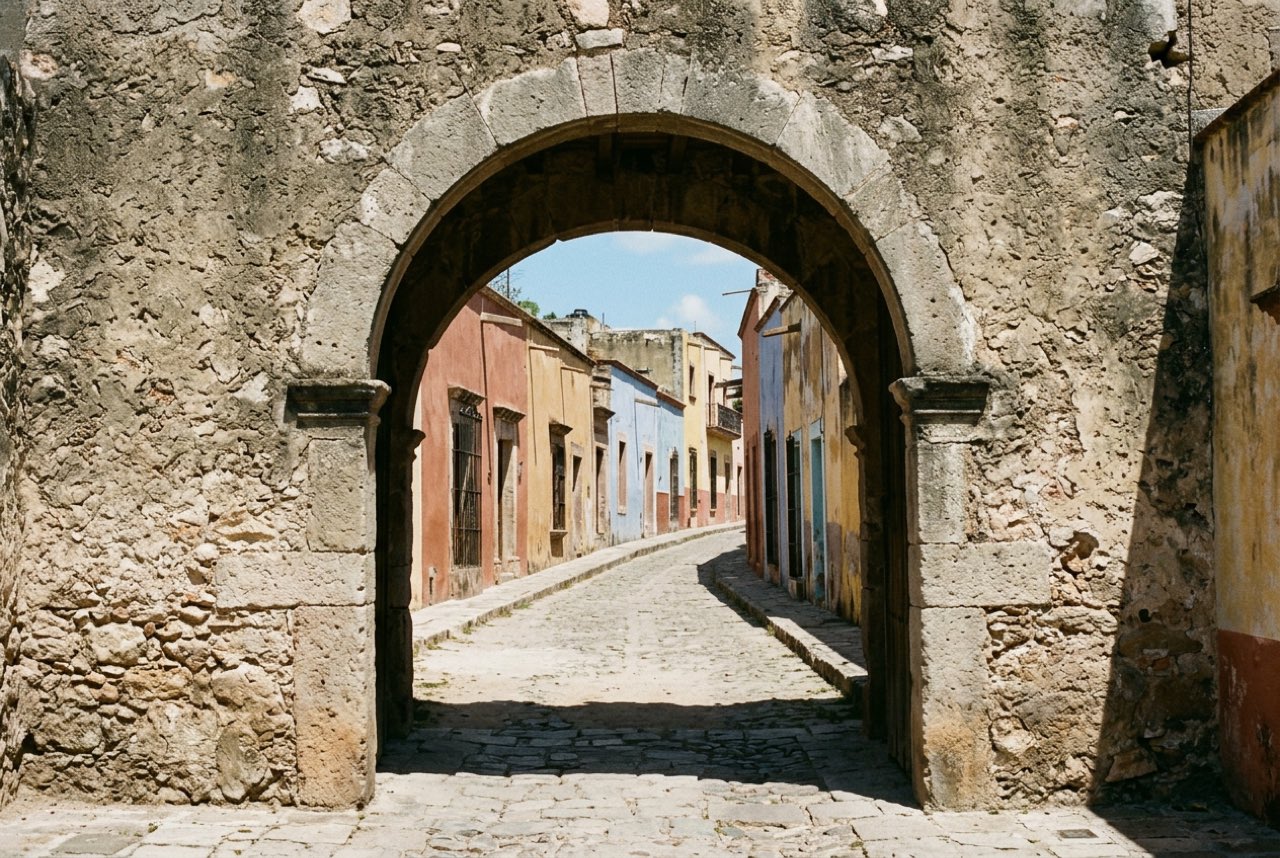
People who ask this desk for Tulum are usually picturing one photograph. It is the gray stone building on the cliff with the sea behind it, taken from the north, in the ten minutes after the gate opens when the light is still low and there is nobody else in the frame. That photograph is real. The building is called the Castillo, it sits on the only stretch of hard rock on that whole coast, and the Maya put it there because it was the one place a boat could see from far out. Everything about the wish is sound. It is the arrangement around it that this office cannot make work.
The site closes at four, and in practice the last entry is earlier than that. It is small: the walled precinct is about 400 by 170 yards, and a person walking it carefully with a guide is finished in ninety minutes. What happens in the other twenty-two and a half hours of the day is the actual holiday, and on that particular road it is a strip of beach clubs, a generator hum, and rooms that are expensive because of the address rather than the room. This desk has tried, more than once, to place people somewhere on that road where the noise stops before two in the morning, and has not managed it in a way that was worth what it cost. So we stopped offering it. That is the whole reason: not distaste for the place, but an inability to book it well.
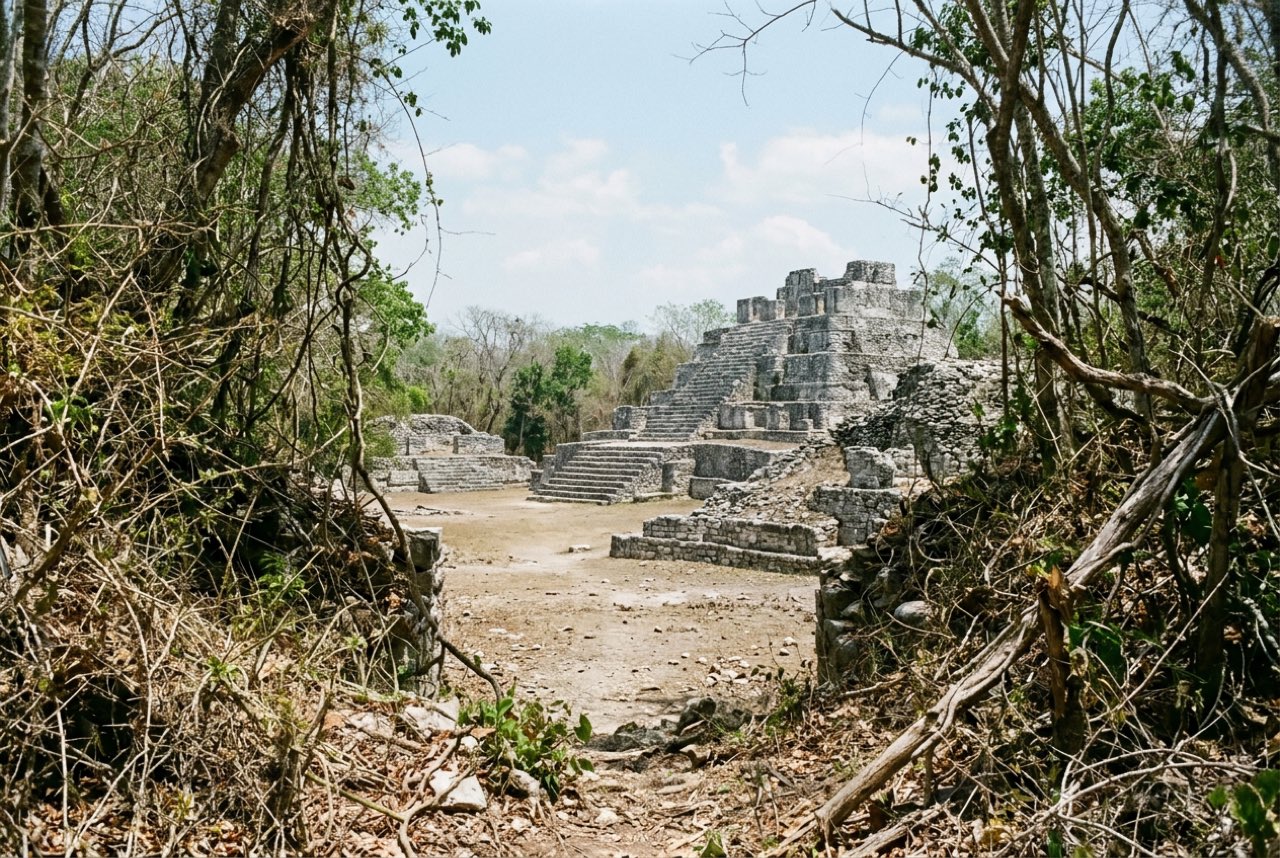
What we offer instead is the other end of the same peninsula and, in a real sense, the other end of the same civilization. Campeche is 340 miles southwest by road, on the Gulf side, and the Rio Bec country sits inland from it in the forest that runs down to the Guatemalan border. The archaeology there is bigger, older in parts, and open from eight until five. On the day we take people into Calakmul you will typically see fewer than forty other visitors across a site that covered thirty square miles at its height and held something like fifty thousand people. That is not a boast about exclusivity. It is a description of how the road works: there is one spur off Highway 186, it is 37 miles long, and almost nobody drives it.
What people ask for
Tulum
The site at Tulum is the only walled Maya port left standing on open water, the sea below it is genuinely the color people say it is, and the town has better cooking now than it had in 2010 by a wide margin.
Tulum is a beach road of clubs behind a ruin, and the ruin closes at four, which means the archaeology is a ninety minute stop inside a holiday whose real business happens after dark on a road this office cannot get anybody a quiet room on.
What this desk will reserve instead
Nine nights in Campeche and the Rio Bec country of southern Mexico
Walled town, limestone forest, four Maya sites with almost nobody in them.
Nine nights, from $3,670 per person. Send a booking request
How far this sits from the request: only the reason for going survives
Nine nights: four in a colonial house inside the walls of Campeche, three at a forest lodge near Xpujil, two back on the coast at Champoton. A driver and vehicle for six of the days. Bags move by road while you walk the sites.
Campeche has its own airport, twelve minutes from the walls, reached by a connection through Mexico City. The ground is flat limestone shelf for the first half and low forest for the second, with the Rio Bec sites sitting up on rubble platforms that require some scrambling. Beds are a restored townhouse with a courtyard, then a lodge of eight cabins with fans and no glass in the windows, then a plain hotel on the water. The season runs November through early April. From $3,670 per person.
Nine nights of accommodation with breakfast; airport transfers at both ends; a driver and vehicle for six full days; all site admissions including Calakmul, Becan, Chicanna and Xpujil; the biosphere reserve entry fee; two guided mornings with a licensed site guide; a boat morning in the Petenes mangroves; a written route sheet with the driver's number on it; bag transfers between the three bases.
International and domestic airfare, usually $520 to $890 per person from US gateways depending on the connection; lunches and dinners, budget $40 a day; the $85 per vehicle road toll and access charge for the Calakmul spur, which is charged separately at three gates and is often misquoted; drinks; tips for the driver and guides; laundry at the lodge, roughly $12 a load; any air conditioning upgrade at the forest lodge, which does not exist because the lodge runs on solar and shuts its inverters at eleven at night.
The Calakmul day is 120 miles of road each way from the lodge plus four to five hours on foot, most of it on uneven limestone, and the two main structures are 150 and 148 steps of ancient stone with no handrail and drops on both sides. Anyone who cannot manage six hours of walking in 88 degree heat with 80 percent humidity should not reserve this. There is no hospital within 90 miles of Xpujil, the lodge has no elevator, and the nearest reliable cell signal is 20 miles away.
What the limestone does to the year
The peninsula is a slab of old sea floor with no rivers on it. Rain goes straight down through the rock instead of running along the surface, which is why the Maya built around cenotes and cisterns and why the forest here changes character so fast between wet and dry. In the dry months the canopy in the Rio Bec country thins out and you can see the shape of the ground: the platforms, the causeways, the low mounds that are still buried. In the wet months it closes over and the same site reads as green wall.
The record for the season we sell, November through early April, looks like this. Daytime highs at Xpujil have sat between 84 and 93 degrees, with humidity running high even in the dry months because the forest holds it. November and December have historically carried the tail of the rains, meaning short heavy afternoons rather than all day drizzle. January and February have been the driest and the coolest, with mornings around 68 degrees that feel genuinely cold in an open cabin. March warms sharply. By the second week of April the heat has usually made the long walk at Calakmul unpleasant enough that we stop the season.
A day on this trip is front loaded. You leave the lodge at half past five for Calakmul, because the last two miles of the spur road are where the wildlife is and because the heat at eleven in the morning is a different proposition from the heat at eight. Becan and Chicanna are closer, twenty minutes and twenty five, and those days are gentler: out at eight, back by two, afternoon free. In Campeche the shape reverses. The town is best walked from five in the evening, when the light comes off the Gulf onto the painted fronts of the houses on Calle 59 and the heat has finally let go.
Who tends to get on with this
The people who do well here are the ones who wanted the ruin more than the beach and were honest with themselves about that. If the Castillo photograph is the thing you actually want out of Mexico, and the beach club afterward was going to be tolerated rather than enjoyed, this trip gives you four sites instead of one and roughly six hours inside each rather than ninety minutes. It also gives you a colonial town at the end that is a genuine place with a working port, not a resort strip, and where dinner for two runs about $35.
It suits walkers, people who have done archaeology before and know they like it, and people who can be somewhere with no signal for three days without becoming uncomfortable. It does not suit anyone travelling for the water. There is swimming at Champoton and it is fine, but the Gulf side is brown green rather than turquoise, the shelf is shallow and warm, and if the color of the sea is the point of the trip then this is the wrong coast and we would rather you knew that now than in month nine of planning.
The year as it has run
Wet tail still present in most years. Sites are green and hard to read, the forest is loud, and the Calakmul road has occasionally been washed at the ford near mile 22. Fewest visitors of the season.
Drying out, warm, and the one period when Campeche fills up: the town's own holiday crowd arrives around the 18th and the townhouse rooms go long before that. Book this month first or not at all.
The steadiest month on record. Mornings near 68 degrees, afternoons in the mid eighties, low rain. This is when the long walk is most comfortable and when the lodge cabins are pleasant at night without fans.
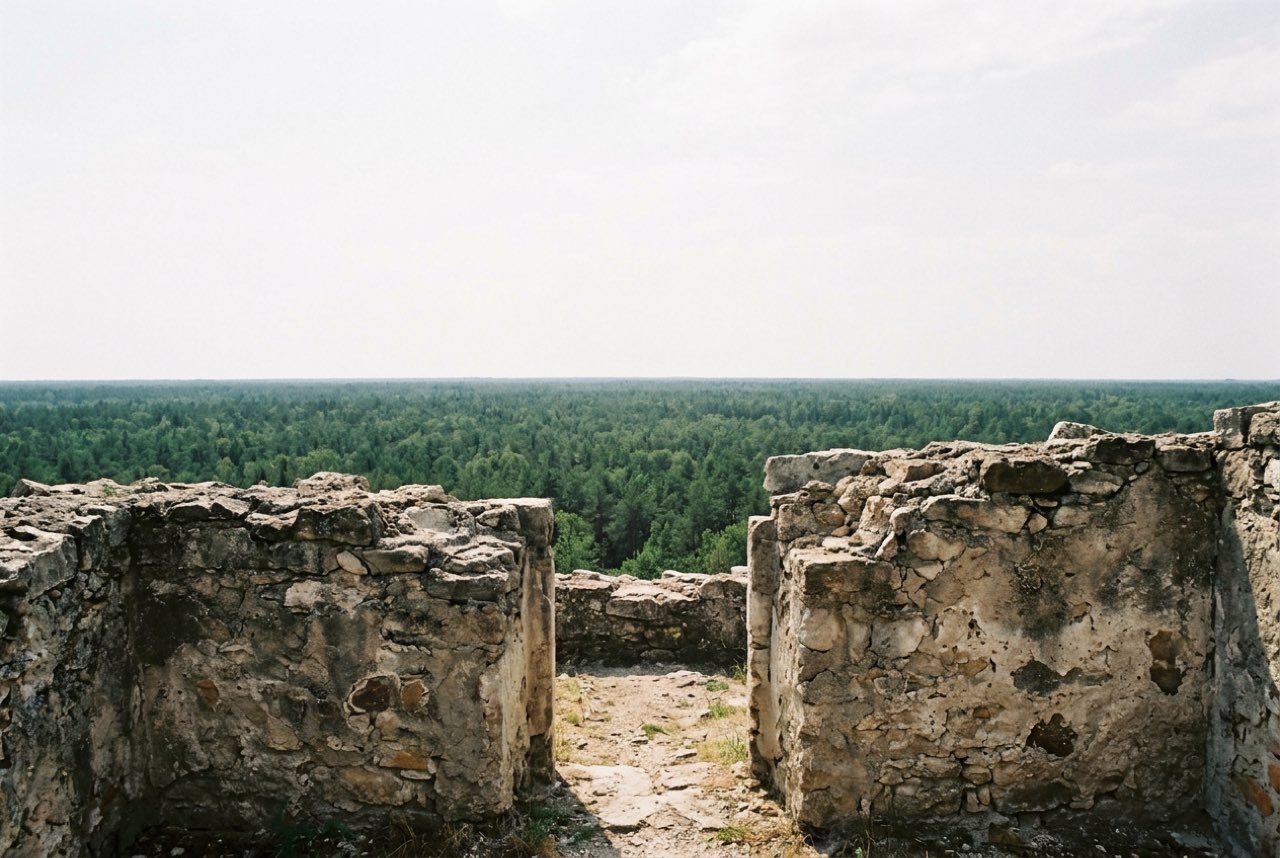
Similar to January with slightly more wind off the Gulf. Good visibility from the top of Structure II at Calakmul, which on clear mornings reaches to the Guatemalan hills 22 miles away.
Warming fast. Afternoons reach the low nineties and the site walks start earlier. Bird activity peaks in the reserve, and the mangrove boat morning at Petenes is at its best.
The last two weeks we sell. Hot, dry, and dusty on the spur road. We close the season rather than sell a Calakmul day in 96 degree heat.
Not sold. Heat, rain, and the road conditions on the spur make the long day unreliable, and the lodge closes for part of it anyway.
The thing that goes wrong most often
The access charges on the Calakmul spur are the single biggest source of irritation on this trip, and they are not our doing. There are three separate gates on that 37 mile road: a state charge, a federal reserve charge, and a per vehicle charge collected near the last checkpoint. Together they come to about $85 for a car with two people in it, they are cash only in pesos, and the amounts have changed twice in the last four years without notice. We put the current figure on your route sheet and give the driver enough to cover it, but if it has gone up between the sheet being written and you arriving, that gap is real money in a place with no card machine. Bring 2,000 pesos in small notes and stop worrying about it.
The second thing is the lodge. It has eight cabins, mesh instead of glass, fans rather than air conditioning, and solar power that goes off at eleven at night. This is not rustic charm dressed up in a sentence: it means your phone charges during the day or not at all, it means insects are on the correct side of the mesh but audible, and it means that on a still night in March the cabin holds the day's heat until about two in the morning. People either find this the best part of the trip or count the hours. There is no middle. We would rather say it plainly than have you discover it on night five, 120 miles from anywhere with a different room in it.
Send this desk a booking request
This form is open 24/7 and takes booking requests at any hour. It asks for no card number and no payment, because nothing is ever paid to this office. Requests are read in the order they arrive and answered within one business day.
No card number is asked for on this page or held anywhere by this office, and sending this costs nothing and commits you to nothing. A request is not a reservation: nothing is held in your name until the operating company confirms it in writing and you have read its terms.