temples with nobody at the gate, coffee farms, the Mekong going wide
Reserve eleven nights in Champasak province and on the Bolaven plateau, southern Laos
Vat Phou sits on a hillside above the Mekong, was built by the same civilization that built the thing most people ask us for, and gets under four hundred visitors on a busy day. You can reserve it as part of eleven nights that also take in the coffee plateau and the river islands downstream.
Eleven nights, from $3,890 per person.
When somebody calls this desk and says Angkor Wat, they are usually describing one image quite precisely: the five towers black against an orange sky, doubled in the reflecting pool, and themselves standing in front of it more or less alone. That image exists. It has been made about four million times. The part of it that does not survive contact with the morning is the alone.
The causeway across the moat is roughly 350 yards long and about 30 feet wide. Before sunrise in January it holds something in the region of two thousand people, most of whom arrived in the same ninety minute window because the ticket office and the tour departures and the sunrise itself are all fixed points that cannot be moved. That is not a failure of management. It is management working: marked paths, timed entry to the third level, staff whose whole job is to keep a crowd of that size moving safely over eight hundred year old sandstone. The site is doing what it has to do. It is simply not doing the thing in the picture.
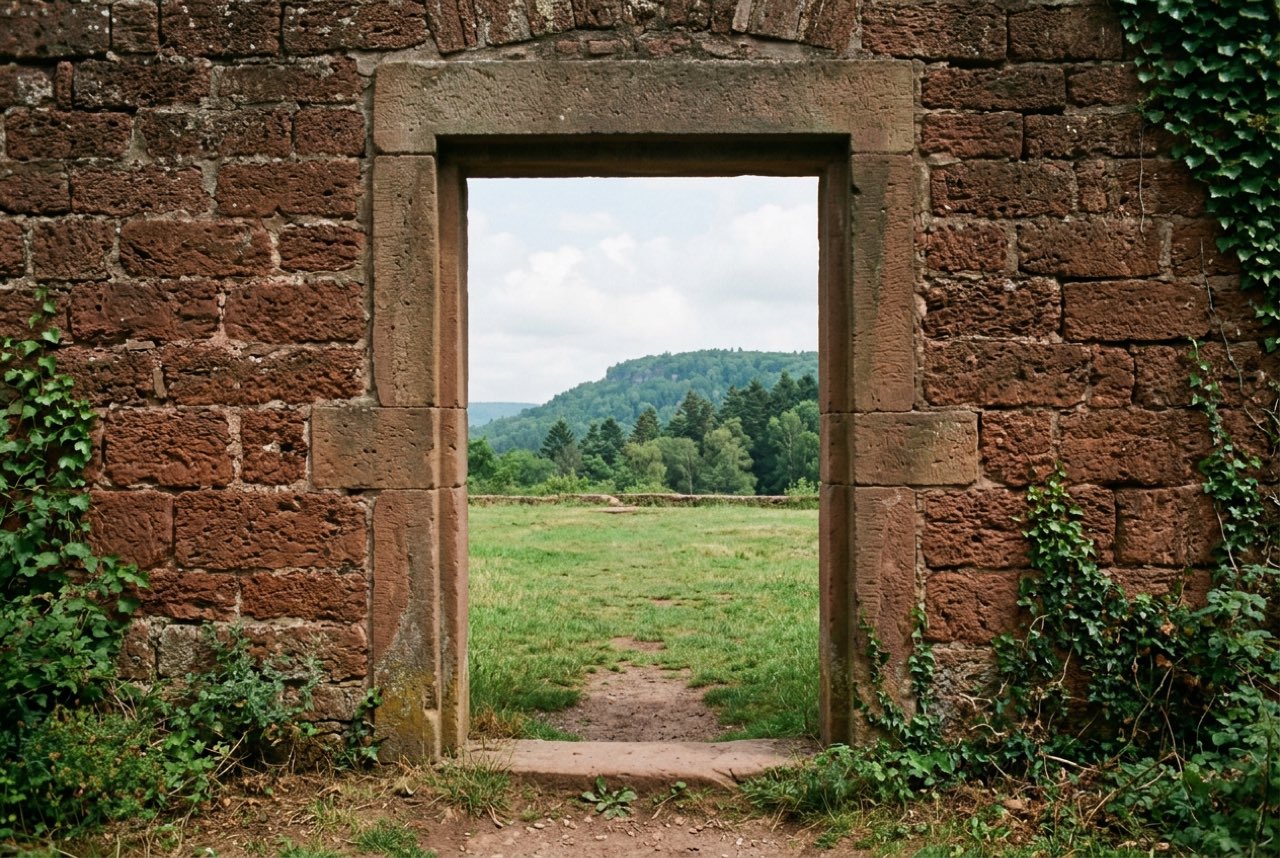
So this office books somewhere else, and we want to be straight that it is not the same trip. Champasak is a smaller idea in every dimension. Vat Phou is one temple complex on one hillside, not a city of them. What it has instead is a spring that still runs out of the cliff behind the sanctuary, a causeway lined with sandstone posts that nobody has swept the grass off, and the specific experience of climbing a Khmer stairway with perhaps nine other people on it. It was a working religious site before Angkor was begun, and it is on the same axis of sacred geography: the mountain behind it has a natural rock formation at the summit that the builders read as a lingam, which is why the temple is where it is. The people who made one made the other.
What people ask for
Angkor Wat
Angkor is the largest religious structure ever built and the bas reliefs on the outer gallery run for half a mile without repeating themselves, which is a real reason to go and not a reason we are going to talk anybody out of.
We do not arrange Angkor Wat because the sunrise most people are booking is two thousand people standing on one causeway before six in the morning, and the site is managed for exactly that number: fixed ticket windows, marked routes, timed access to the upper level.
What this desk will reserve instead
Eleven nights in Champasak province and on the Bolaven plateau
Temples with nobody at the gate, coffee farms, the Mekong going wide.
Eleven nights, from $3,890 per person. Send a booking request
How far this sits from the request: only the reason for going survives
Eleven nights: four in Champasak town in a converted French colonial house, three in a plateau guesthouse near Paksong, four in a river bungalow on Don Daeng. One driver and vehicle throughout; your bags go in the vehicle and you never carry them between rooms.
Pakse airport is the gateway, 25 miles north of Champasak town, reached on one connecting flight from Bangkok or Hanoi. The ground is flat riverbank for the first four nights, then a climb to 3,600 feet on the plateau where nights run in the fifties, then flat again on the island. Beds are a colonial house, a plain guesthouse with hot water and no air conditioning, and a bungalow with a fan and a mosquito net. The season runs November through early March. Eleven nights, from $3,890 per person.
All eleven nights of accommodation, two people sharing; private vehicle and English speaking driver for the full eleven days; a licensed local guide at Vat Phou and on two plateau days; the Vat Phou site fee; boat crossings to and from Don Daeng and the half day boat downstream to the Khone falls; all breakfasts and four dinners; coffee farm visit and processing walk at Paksong; drinking water in the vehicle throughout; airport pickup and drop off at Pakse.
International and regional flights to Pakse, usually $340 to $620 from Bangkok depending on month; lunches and seven dinners, budget $8 to $20 a head; the Vat Phou museum ticket at roughly $2; tips for driver and guides, commonly $60 to $90 across the trip for two; the boat to see the Irrawaddy dolphins at the Cambodian border, about $22 for a shared seat; laundry, which is $2 to $4 a kilo and the only laundry option on the plateau is the guesthouse; anything you drink beyond water in the vehicle; the $50 entry stamp payable on arrival, which is a government charge and nothing we handle.
The Vat Phou upper sanctuary is 168 stone steps with no handrail, worn and uneven, and there is no route around them. Two plateau walks are 2.5 and 4 miles on red dirt tracks that stay slippery for a day after rain. The plateau guesthouse has no elevator and no air conditioning, and the island bungalow runs on a generator that goes off around eleven at night. If steps are a problem, or if you need a room you can cool on demand, this trip will not work and we would rather say so before you reserve.
The plateau, the river, and what the weather has done in past Januaries
The Bolaven plateau is basalt, which is why there is coffee on it. The land sits between 3,300 and 4,300 feet and the topsoil is deep and dark and holds water in a way the lowland does not. Robusta went in under the French administration in the 1920s and arabica followed later on the higher ground around Paksong. What you get walking a farm there in January is drying beds, the smell of fermenting cherry, and family operations of two to twelve acres rather than anything industrial.
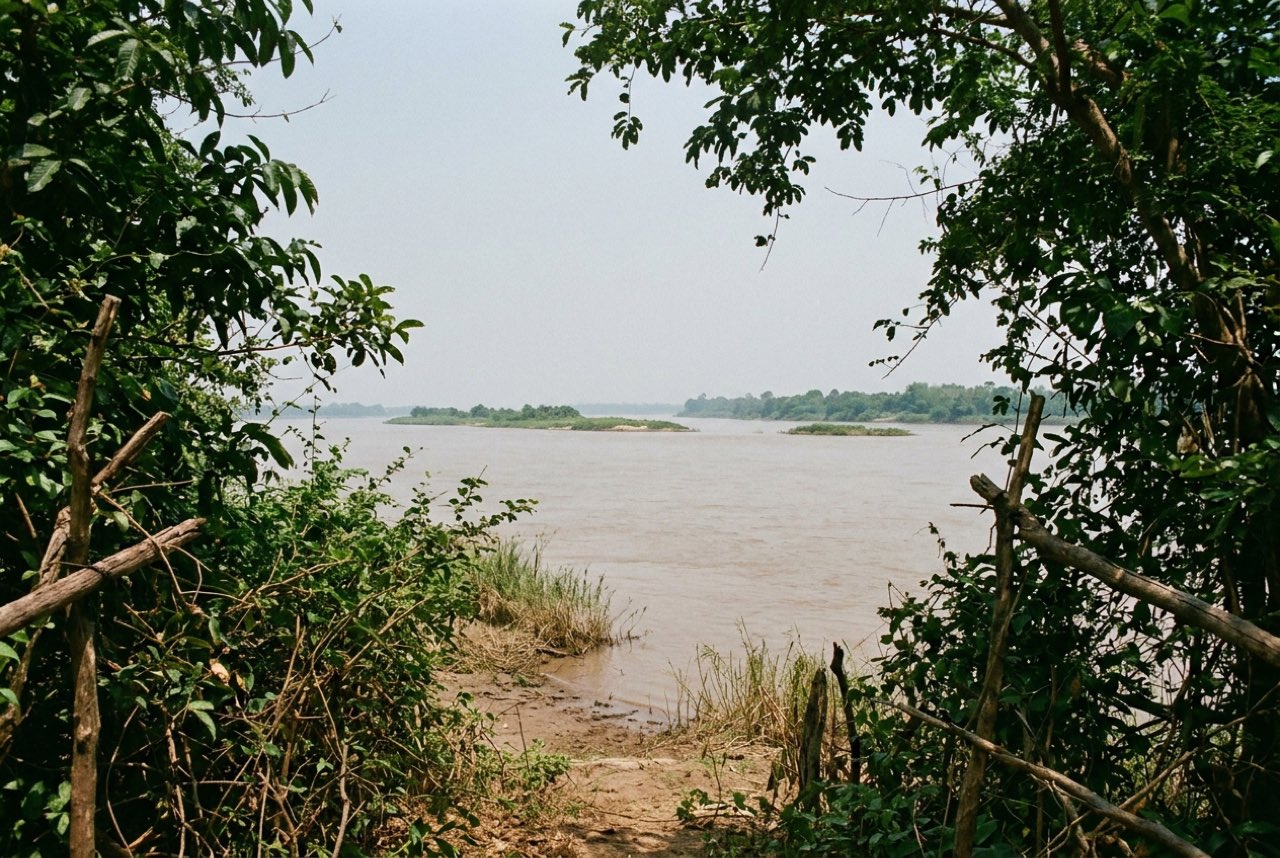
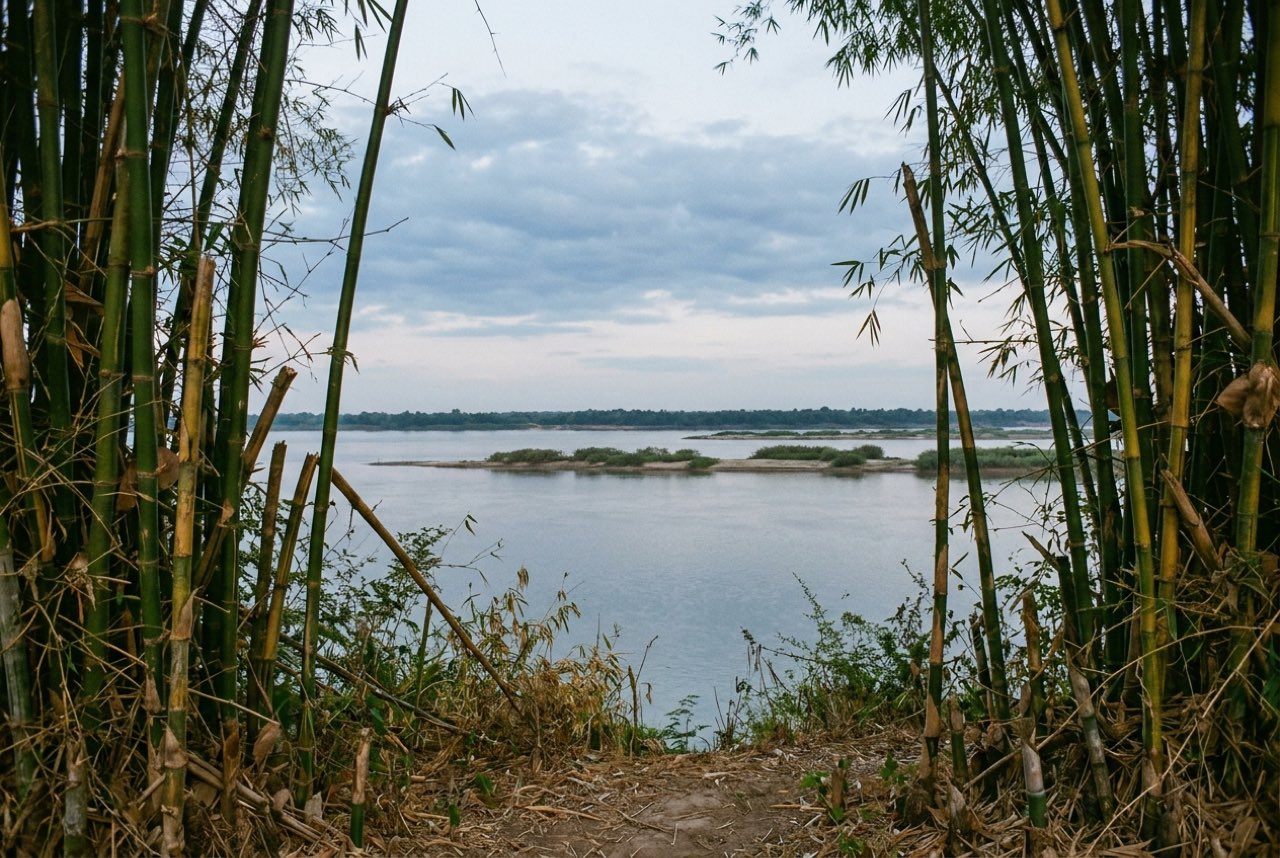
Down on the river the scale changes completely. Below Champasak the Mekong opens out into the stretch the maps call Si Phan Don, and in the dry season the channel spreads to about four miles across with sandbars and wooded islands standing up out of it. The water is low and brown and slow. Fishermen work traps in the rapids at the southern end, in structures made of lashed bamboo that get rebuilt every year after the flood takes them out.
On the season: past Novembers through early March have been the dry stretch, with lowland days recorded in the high eighties and low nineties and plateau nights that have gone down into the low fifties. What has happened before is not a forecast, and we will not give you one. What we will say is that this is what the record holds, and that the trip does not run from June to September because the plateau tracks become mud and the boat schedules stop being reliable.
Who tends to be happy with eleven nights in the south
This suits people who are content to be somewhere for four days without a fixed program in it. Two of the plateau days have nothing scheduled beyond a walk and a farm, and the island days have less than that. If your holiday satisfaction depends on having seen a certain number of named things, the arithmetic here will disappoint you, because the named things number about six.
It also suits people who have already done the marquee sites elsewhere in Southeast Asia and found the queue more memorable than the building. Several of the people who reserve this trip have been to Angkor, liked it, and are not going back. That is a perfectly reasonable position and it is roughly the position this itinerary is built for.
The year as it has run
The rain has usually stopped by the second week and the tracks firm up. The river is still high from the wet season, so the sandbars at Si Phan Don are mostly underwater and the boat routes run wide.
The busiest of the dry months here, which in Champasak means the guesthouse is full and there are perhaps forty people at Vat Phou in the morning. Plateau nights have gone to the mid fifties.
Coldest recorded nights on the plateau, low fifties, occasionally under fifty at the higher farms. Bring a fleece. The lowland is dry and dusty and the light is flat and hard by ten in the morning.
Coffee harvest tailing off around Paksong. Drying beds full, processing yards busy, and the farms are genuinely working rather than demonstrating. River levels dropping steadily.
Heat builds through the month and by the last week the lowland has recorded days over 100 degrees. Farmers begin burning field edges, and haze can cut visibility from the Vat Phou stairway to under two miles.
We do not run the trip. Hottest part of the year, and the pre monsoon storms make the plateau roads unpredictable in a way that strands people.
Wet. Plateau tracks turn to red mud, and the waterfall flow that people come for is spectacular and also makes half the viewpoints inaccessible.
The part of this trip people are least prepared for
The plateau guesthouse is plain, and plain is doing real work in that sentence. It is a concrete building with tile floors, a hot shower that takes a minute to run warm, a fan, and no air conditioning at all. There is no restaurant beyond a kitchen that does breakfast and one evening dish. Guests who have come from a good hotel in Bangkok two days earlier sometimes find the drop steeper than they expected, and we would rather tell you now than have you discover it at 3,600 feet in the dark. The reason we use it is that it is fifteen minutes from the farms and the alternatives are an hour away down in Pakse, which would cost you two hours of every plateau day.
The second thing is the road. Route 16 up onto the plateau is paved but the farm tracks are not, and on a day after rain the vehicle will be moving at walking pace in places. Distances in southern Laos are short and slow: the 25 miles from Pakse to Champasak town takes about an hour, and the drive up to Paksong is 30 miles and takes an hour and a half. Nothing about the itinerary is rushed, but if you are used to covering ground quickly, the map will look like it promises more than the day delivers.
Ask the desk to reserve something
This form is open 24/7 and takes booking requests at any hour. It asks for no card number and no payment, because nothing is ever paid to this office. Requests are read in the order they arrive and answered within one business day.
No card number is asked for on this page or held anywhere by this office, and sending this costs nothing and commits you to nothing. A request is not a reservation: nothing is held in your name until the operating company confirms it in writing and you have read its terms.