cloud forest, coffee farms and a warm gulf in one province
Reserve a highland and coast week in Chiriqui province, western Panama
The wish is Costa Rica, zip lines and volcanoes, and it is a reasonable wish that this desk cannot place. You can reserve ten nights one border over, in a province with a 11,400 foot volcano, cloud forest at 6,000 feet and a warm gulf four hours downhill.
Ten nights, from $1,750 per person.
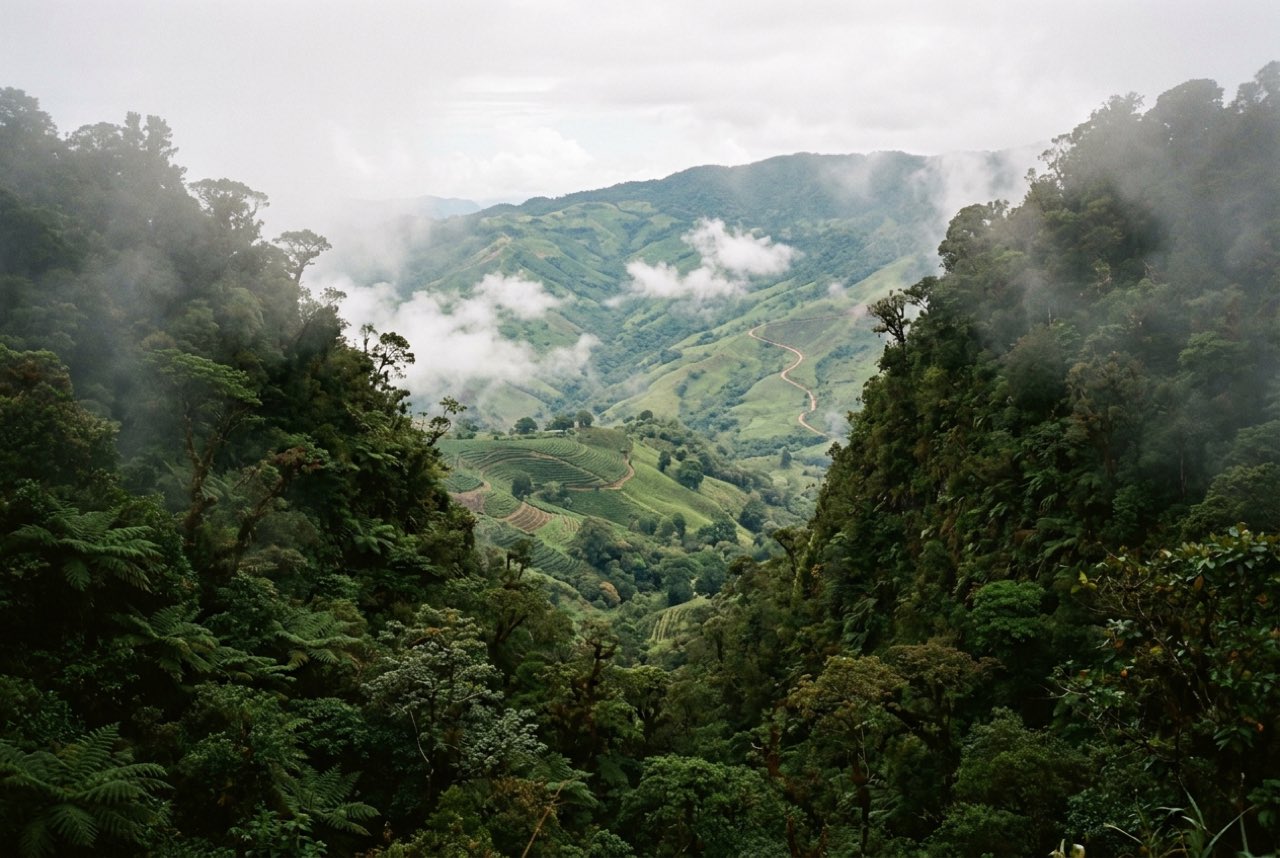
Most people asking for Costa Rica have a fairly precise film running: a green wall of trees, a cable strung across a gorge, steam coming off a black cone, and a hot spring at the end of the day. That is a real place and it exists. It is also, at this point, a route with a schedule, and the schedule is the part nobody pictures. A van collects you at seven. It puts you down at a platform where forty other people are already in harnesses. You are back at the hotel at four, and the next morning a different van takes you to the next thing on the same list.
This office cannot place a booking that comes out any other way. The companies operating that circuit sell it as a product with fixed departure dates, fixed lunch stops and a fixed order, because that is how you move eleven thousand people a month through six locations without losing anybody. There is nothing dishonest in it. It is simply not a week we could shape around what you asked for, and we would rather say so before you have paid anyone than after.
What we can place is a week in the province immediately over the border to the east. Chiriqui has the same spine of mountains, the same cloud forest, a volcano that is 11,400 feet rather than 5,500, and a coastline the Costa Rican route does not include at all. The difference is traffic. On the highland walks you will pass farm workers and perhaps two other groups. The tradeoff, and it is a real one, is that you will not be flying through the canopy on a steel line. Nobody in Chiriqui runs that at the scale you have in mind, and we will not pretend otherwise.
What people ask for
Costa Rica, zip lines and volcanoes
The people who built that circuit did something genuinely difficult: they made rainforest safe to walk into, they trained guides who can find a sloth from a moving vehicle, and they proved a small country could earn a living from standing trees rather than felled ones.
The Costa Rican circuit is now a queue of shuttle vans between the same six places, and the operators we could place a booking with sell fixed departure dates on that identical loop, so the week we would arrange for you would not be the week you are imagining.
What this desk will reserve instead
A highland and coast week in Chiriqui province
Cloud forest, coffee farms and a warm gulf in one province.
Ten nights, from $1,750 per person. Send a booking request
How far this sits from the request: a different week, or the country next door
Ten nights: six in a highland guesthouse above Boquete at 4,100 feet, four in a wooden cabin on the gulf. A driver moves the party and the bags between them. Day walks return to the same bed each evening.
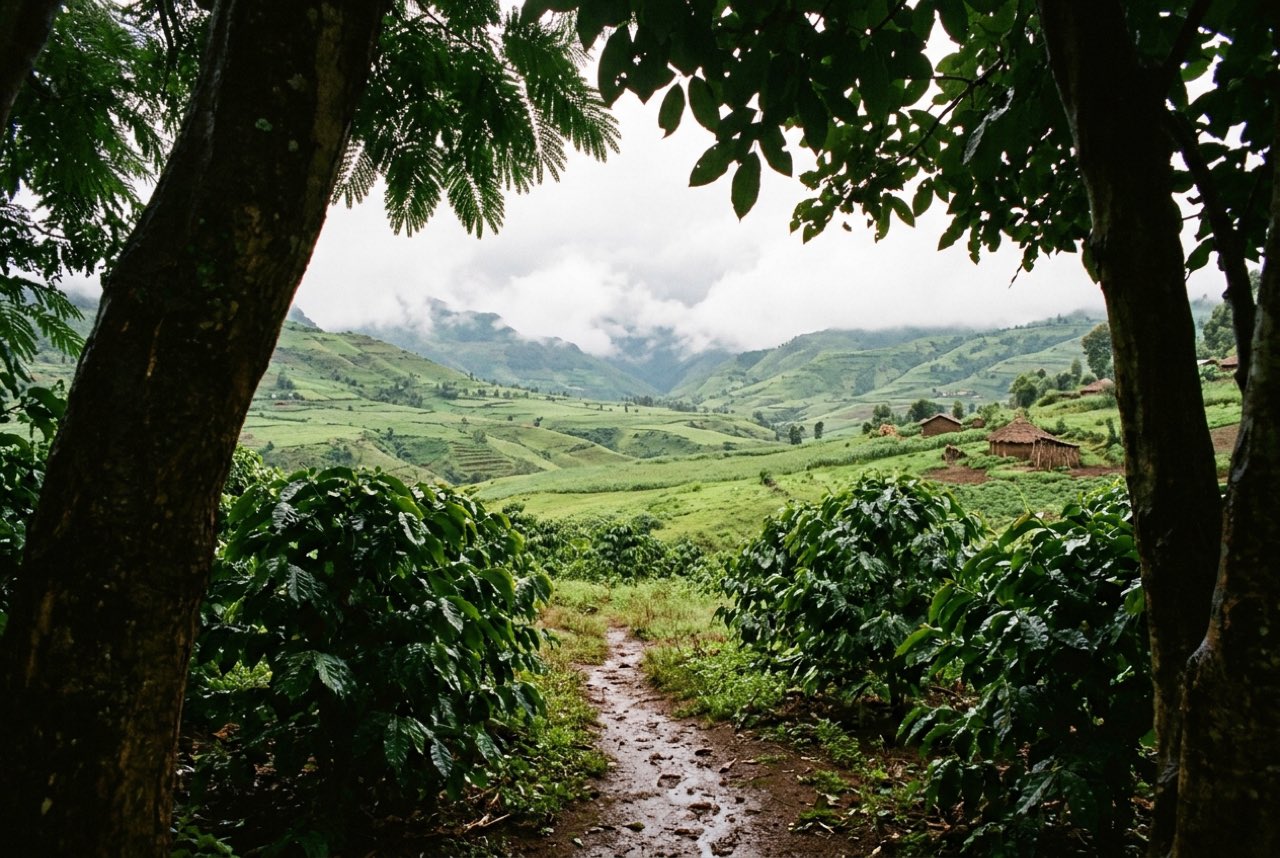
Chiriqui sits 30 miles from the Costa Rican border and 25 minutes by road from the airport at David, which takes a one hour flight from Panama City. The ground is volcanic: black soil, coffee terraces, and gravel farm tracks that climb steeply out of every valley. Beds are a family guesthouse in the highlands and a cabin with a mosquito screen on the water. The dry months run mid December to mid April. Ten nights, from $1,750 per person.
Ten nights of lodging with private bathrooms; all ground transport within the province including airport transfers at David; breakfast every morning and six dinners; a full day walk in the cloud forest with a licensed local guide; a working coffee farm visit from picking through roasting; two boat days in the Gulf of Chiriqui with fuel and captain; drinking water and coolers in the vehicle; the written itinerary with every driver name and phone number before departure.
Flights into Panama City and the connection to David, which runs $95 to $160 each way; the four lunches and four dinners not listed, which are $8 to $22 a head locally; the national park entry at Volcan Baru, $10 per person; guide gratuities, customarily $20 to $30 per guiding day; laundry at the guesthouse, $6 a load; alcohol anywhere; the summit walk described below if you take it, $180 for the party; and anything at all in Costa Rica, since the itinerary does not cross the border.
The cloud forest day covers 7 miles with 1,900 feet of climbing on wet clay, and there is no shorter version of it that reaches the same ground. The farm tracks are steep enough that a walking frame or a wheelchair will not pass. Anyone who needs a paved surface, a handrail, or a bathroom within twenty minutes should not reserve this week. There are no zip lines on the itinerary, none are offered as a substitute, and the boat days run in open water that gets choppy after eleven in the morning.
The ground under Boquete, and what ten Januaries have looked like
The town of Boquete sits in a bowl at 3,900 feet with the volcano closing the northern end of it. Everything grows: coffee on the terraces from 3,500 to 5,500 feet, oranges lower down, and above the farms a band of cloud forest that stays wet because the mountain catches the cloud coming off the Caribbean side and holds it. That is why the ground is the way it is. Black volcanic soil, deep, and slick as soap when it rains, which above 5,000 feet it does in some form most afternoons even in the dry season.
The dry months, as a record of what has happened rather than a forecast for what will, run from about the middle of December to the middle of April. In that window mornings are usually clear until ten or eleven, the highland temperature sits between 58 and 76 degrees, and the fine wind-driven mist the town calls bajareque arrives most afternoons anyway. It is not rain exactly. It is cloud moving sideways through you, and it produces the rainbows that appear in every photograph of the valley. From May onward the afternoons turn properly wet and the farm tracks become a genuine problem for a two wheel drive vehicle, which is why the trip runs when it runs.
Down on the gulf the picture is different by 15 degrees and a whole climate. David and the coast run 84 to 92 in the afternoon with humidity to match. Four hours of driving separates the guesthouse from the cabin, and people are regularly surprised by how completely the weather changes across that distance. Bring something for both, because a fleece that is essential at 6 a.m. above Boquete is dead weight for the second half of the week.
The kind of traveler this ten nights actually fits
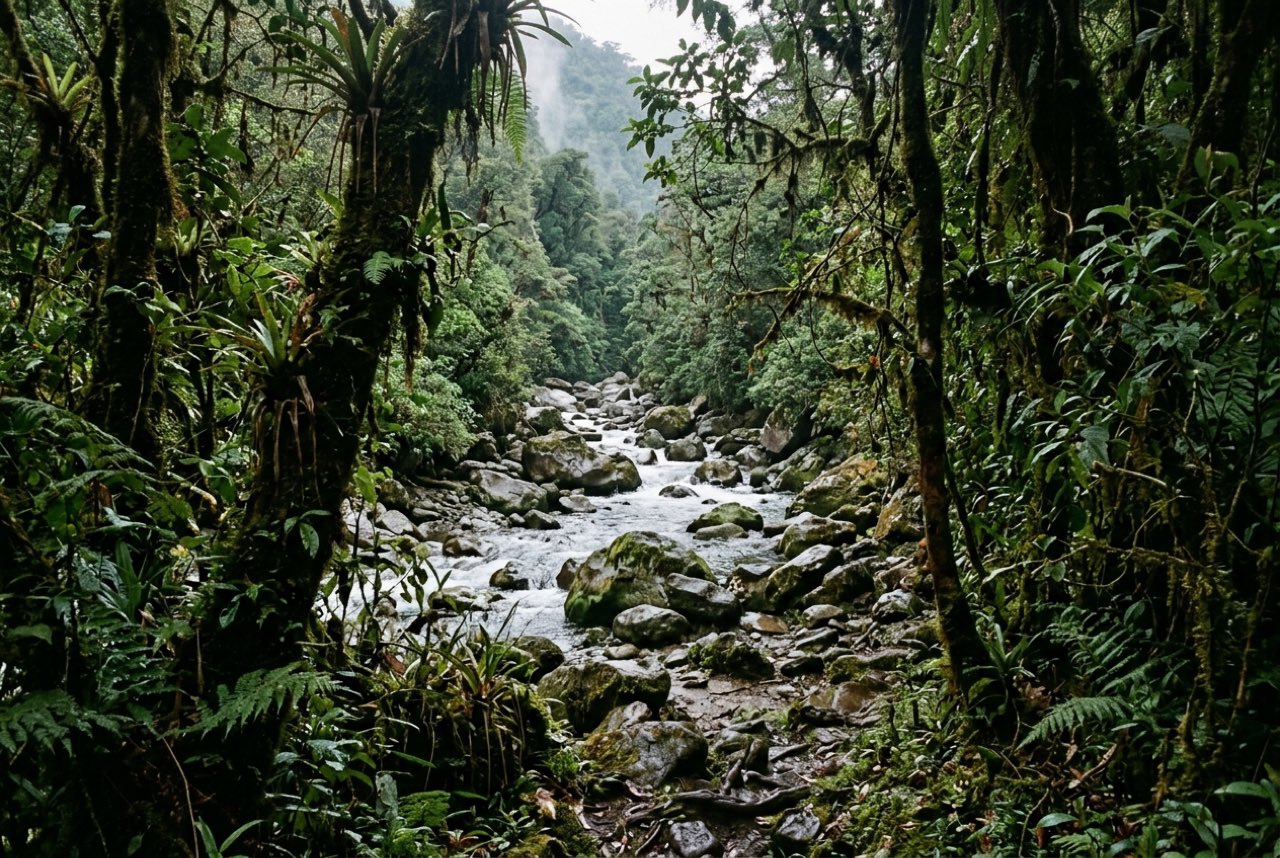
This suits somebody who wants to walk in forest for six or seven hours and is content that the reward is the forest itself, not an activity staged inside it. The cloud forest day is the center of the week: quetzals between January and May if the wild avocados are fruiting, three species of hummingbird you will see within the first hour, and long stretches where the only sound is water. If that sentence sounds thin to you, this is the wrong reservation and you should say so now rather than at the trailhead.
It also suits people traveling in twos and threes who do not want to be processed. Nothing here runs on a fixed departure date, the guesthouse holds eleven guests, and the boat carries your party alone. The cost of that is flexibility in the other direction: there is no second group to join if you feel unwell on the walking day, and there is no alternative activity waiting in town. On a bad weather morning the honest answer is that you sit in the guesthouse and read.
The year in Chiriqui as it has run
Clearest stretch of the year and the coffee harvest is in full swing, so the farms are working rather than demonstrating. Also the busiest fortnight, and lodging in Boquete is genuinely tight.
The strongest window. Trails are firm, the bajareque is light, and quetzal sightings in the highland forest have been most reliable in these weeks when the wild avocado crop holds.
Hot and dry. The gulf water is at its calmest of the year, the highland afternoons are dusty on the farm tracks, and the volcano is visible from town most mornings before nine.
The transition. First real afternoon storms arrive somewhere in the second half of the month, usually building after two, and the tracks above 5,000 feet start holding water again.
Green season proper. Everything is spectacular and everything is wet. The trip is not offered because the walking day cannot be run safely on that clay.
Wettest of all, with road washouts on the mountain routes in most years. The province is beautiful and this itinerary does not exist in these months.
Drying out, unpredictably. Some years the tracks are usable by the last week, some years they are not, so we do not sell dates before December 12.
The summit walk, and why we do not include it
The obvious question about Chiriqui is Volcan Baru, and the honest answer needs stating plainly. It is 11,401 feet, the walk is 8.5 miles each way on a rough vehicle track, and the standard approach means leaving town at midnight to reach the top for sunrise. Total ascent is roughly 5,400 feet. People do it in ordinary condition and people also turn back at 9,000 feet with a headache they did not expect. It is the one place in the country where, on a clear morning, you can see both oceans at once, and clear mornings are perhaps one in four.
We leave it out of the ten nights on purpose, and the reason is scheduling rather than difficulty. A midnight start destroys the following day, and the following day is the cloud forest walk, which is the reason to come. If you want the summit, we will place it with a local operator as an add-on at $180 for the party in a four wheel drive to the halfway point, and we will move the cloud forest day so you are not attempting both inside thirty hours. Say so when you write, because it changes the order of the whole week and it cannot be arranged once you are there.
The second awkward thing is the flight. Getting to David means a connection in Panama City, and the domestic hop is a small aircraft with a hard luggage limit that surprises people every single time. Overweight bags are charged at the counter and there is no negotiating it. Plan on 30 pounds a person and put the rest in a bag you leave at the hotel in the city.
Ask the desk to reserve something
This form is open 24/7 and takes booking requests at any hour. It asks for no card number and no payment, because nothing is ever paid to this office. Requests are read in the order they arrive and answered within one business day.
No card number is asked for on this page or held anywhere by this office, and sending this costs nothing and commits you to nothing. A request is not a reservation: nothing is held in your name until the operating company confirms it in writing and you have read its terms.