one island, one bed, one ferry each direction
Reserve nine unhurried nights on Ikaria, one Aegean island learned at walking speed
You reserve one room on Ikaria for nine nights and unpack once. A Greek island hopping week gets you five islands and roughly six hours awake on each of them.
Nine nights, from $2,010 per person.
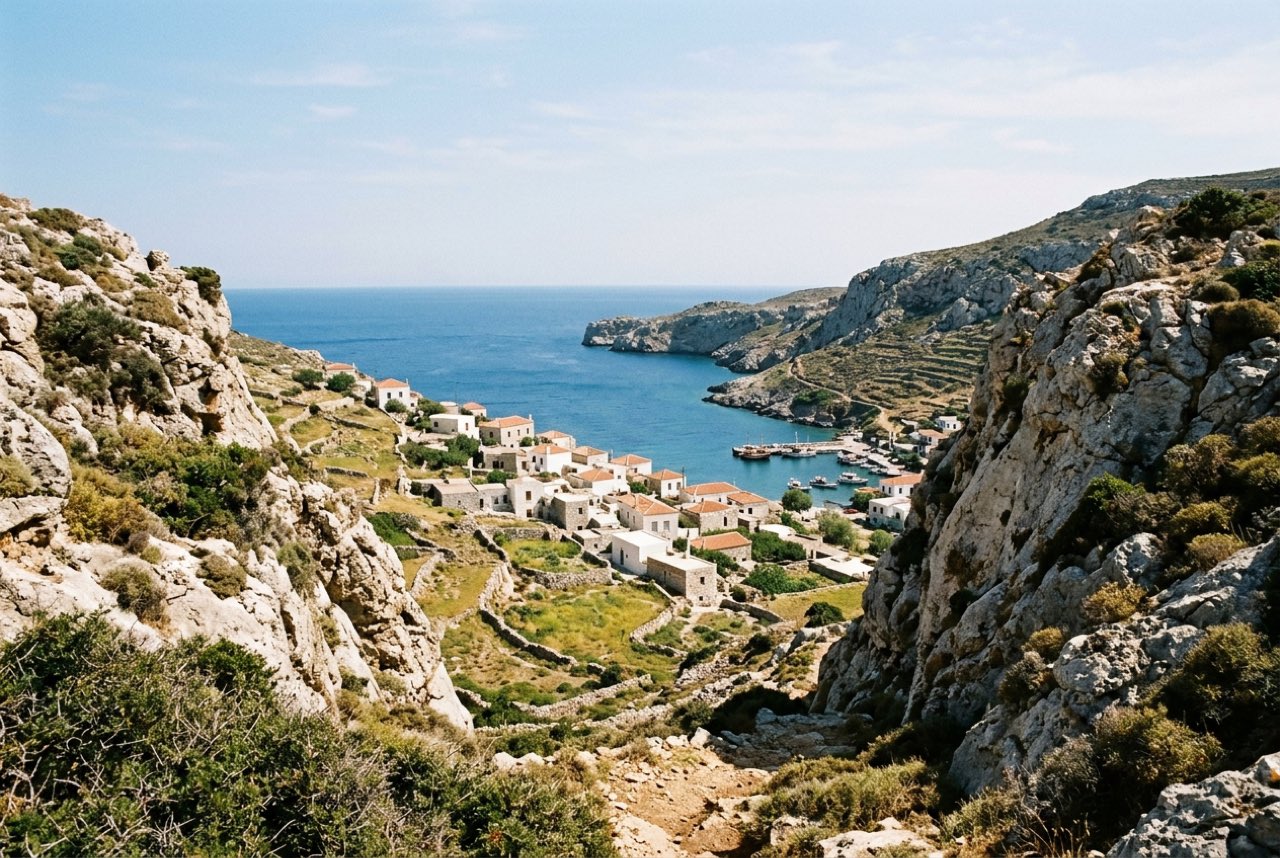
What people are asking for when they say a Greek island hopping week is usually a very specific picture, and it is worth saying out loud because the picture is accurate. It is the upper deck early, coffee going cold in the wind, a white town getting larger off the bow. It is the sense that the Aegean is a network rather than a set of destinations, and that you can move through it the way you move through a city. That is true. Ferries do run like buses in July. The islands are close enough that the map makes a week look generous.
The arithmetic is where it comes apart. Seven nights, five islands, four crossings. The boats that connect the smaller islands to each other rather than to Piraeus tend to leave at inconvenient hours, and the connections that work on paper often require a night in a port town you did not want to see. Check out is at eleven, check in is at three, and a crossing eats the middle of the day. Count the hours honestly and a five island week gives you somewhere between four and nine waking hours on each island, most of them spent within half a mile of a harbor, which is the part of any Greek island that looks most like every other Greek island.
So this office offers the opposite shape and is straightforward that it is a swap, not an upgrade. One island for nine nights. One room, one key, one drawer you actually unpack into. The ferry twice, at the beginning and at the end, where it belongs. Ikaria is the island we send people to for this because it rewards the extra days more than most: it is 99 square miles, it has a mountain spine that splits the weather in two, and almost nothing about it is arranged for a person passing through.
What people ask for
a Greek island hopping week
The wish is sound: the Aegean genuinely differs island to island, the deck of a ferry at seven in the morning is one of the better places to be awake, and wanting to see more than one of them is not greed.
This desk does not put together a Greek island hopping week because a seven night version means three ferry crossings, three check ins, three check outs, and something between four and nine daylight hours actually standing on each island.
What this desk will reserve instead
Nine unhurried nights on Ikaria
One island, one bed, one ferry each direction.
Nine nights, from $2,010 per person. Send a booking request
How far this sits from the request: a different week, or the country next door
Nine nights in one family run guesthouse above Armenistis, twin or double rooms with a balcony, one hired car for the party, two ferry legs at the start and end only, and luggage that stays in the room from arrival to departure.
Ikaria sits about 145 miles southeast of Athens by sea, with a small airfield at Faros taking short hops and the ferry from Piraeus running six to nine hours depending on the boat. The north coast road climbs and falls constantly, and gradients of 12 percent are ordinary. Rooms are plain, tiled, family owned, with a balcony and a kettle. Boats and rooms run from late April to late October, thin at both ends. Nine nights, from $2,010 per person.
Nine nights in a twin or double room with balcony; both ferry legs in reserved seating, held with the line by the operating company under its own licence; port transfers at Evdilos on arrival and departure; a small hired car for the full stay with basic insurance; breakfast each morning at the guesthouse; two half day walks with a local guide who lives on the island; one afternoon at the hot springs at Therma; a written route sheet for the mountain villages; and all reservation handling by this office.
Flights to Athens, typically $780 to $1,340 round trip from St Louis; the domestic hop to Faros if you prefer it to the boat, around $95 to $160 each way; lunches and dinners, which run $16 to $34 a head in the north coast tavernas; fuel, roughly $70 across the nine days; the collision damage excess on the car, held at 900 euros against a card; any boat trip to Fourni, $28 per person return; and the departure tax and port fees paid in cash at the harbor.
Do not reserve this if stairs are a problem. The guesthouse sits 60 feet above the road with 41 steps and no lift, the villages are built on slopes of 15 to 20 percent, and the two guided walks cover four and six miles with 900 and 1,400 feet of ascent on loose stone. There is no pavement anywhere on the north coast and the driving is single track with blind bends. The nearest hospital with a surgical ward is in Agios Kirykos, an hour and ten minutes away over the ridge.
What the north coast is actually like underfoot
Ikaria runs northeast to southwest with the Atheras ridge down the middle, topping out around 3,400 feet. This matters more than the numbers suggest, because the ridge divides the island into two different places. The north coast, where you will be staying, is greener, cooler in the afternoon, and takes the wind. The south is drier, hotter, and calmer. The road between them crosses at about 2,600 feet and takes 40 minutes from Armenistis to Agios Kirykos in good conditions.
The villages here are not laid out on a grid or around a square. Raches, the market village 20 minutes uphill, has shops that open at nine, close at one, and open again at six or seven, and a few that keep going until two in the morning because that is the local habit and nobody has seen a reason to change it. Christos Raches has the same pattern. It is not a performance for visitors. If you arrive expecting a shop at four in the afternoon you will find a closed door and a cat.
The season record, and it is a record rather than anything anyone can promise you: boats have generally run daily from late April, the water on the north coast has usually been swimmable from the second week of June, and August has typically brought the meltemi, a north wind that on the worst days has canceled sailings for 24 to 48 hours at a stretch. September and early October have historically been the steadiest stretch, with the sea still warm and the wind down. We tell people going in August to build in a spare day at the Athens end.
The kind of person who gets nine good days out of this
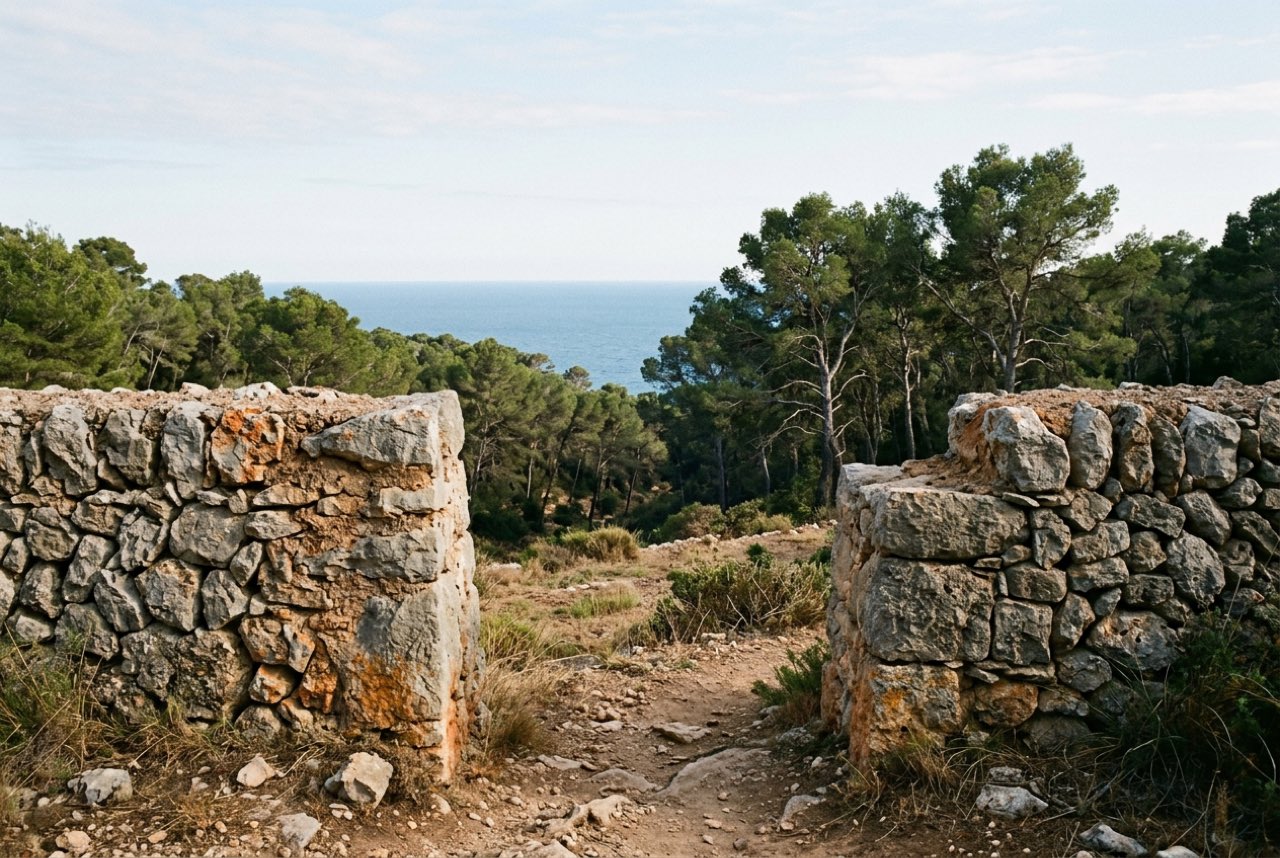
This suits somebody who is comfortable with a day having no plan in it. There is a beach at Livadi and another at Mesakti, a walk to Nas where the river meets the sea, three or four tavernas you will end up returning to, and the mountain villages inland. That is the whole inventory. A person who wants a new sight every morning will run out on day four and start resenting the drive.
It also suits people who drive. The hired car is not optional in any real sense: buses exist but run to a timetable built around school and market days, and the walk from the guesthouse to Nas and back is six miles with real ascent. If nobody in the party wants to drive a single track road with a drop on one side, this is the wrong island and we would rather say so before you reserve than after.
Nine years of the same island, month by month
Boats resume and about half the rooms open. Water is around 62F and few people swim. The hillsides are green and the walking is the best of the year, but several tavernas stay shut.
Reliable warmth on land, sea still cool at roughly 68F. Long light evenings, everything open, and the north coast still quiet enough that you will recognize other guests by day three.
The month most people who have been before choose. Water hits swimming temperature in the second week, the meltemi has not usually settled in, and the villages are busy without being full.
Hot and dry, high 80s inland by early afternoon, and the wind starts to show up. Beaches get crowded between noon and five. Walking is better before nine in the morning.
The busiest and least predictable stretch. Panigiria, the village festivals, run through the month and are worth arranging a night around. Sailings have been canceled by wind in most recent years.
Historically the steadiest month: warm sea, thinner crowds, wind dropping off after the first week. Prices at the guesthouse are the same as June.
Water still around 74F, land cooling, and a slow closing down. Some tavernas shut mid month. The last comfortable ferry crossings are usually in the third week.
Rooms and boats wind down. We stop placing reservations for arrivals after the 24th because too much closes without notice.
The two things people find out late
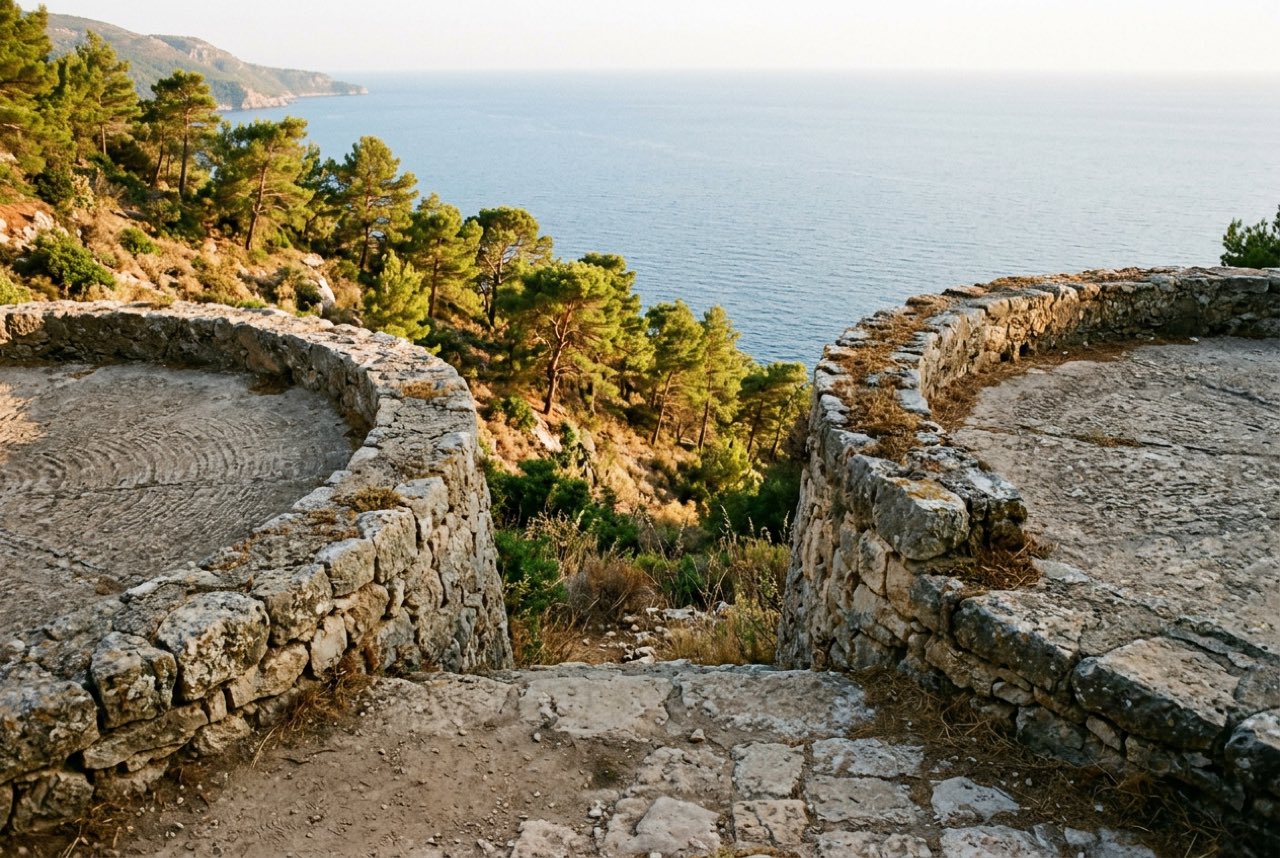
The first is the getting there, and it is genuinely a long day. Flying into Athens, crossing the city to Piraeus, and taking a boat that runs six to nine hours means most people arrive on Ikaria the day after leaving St Louis, tired, at a port that is 20 minutes from the guesthouse on a dark road. The domestic flight to Faros shortens this a lot but the aircraft are small, the schedule is thin, and the field closes in high wind more often than the harbor does. Neither route is bad. Both are longer than the map implies, and we would rather you plan for a lost day at each end than be surprised by it.
The second is money, and specifically the car. The collision excess is 900 euros held against a card for the length of the stay, which is a real hold on a real card and it catches people out. The roads are narrow, the stone walls are close, and scraped door mirrors are the most common thing that happens. You can reduce the excess with the local operator on arrival for roughly 12 euros a day. We mention it here because nobody enjoys learning about it at a desk at eleven at night.
One more thing that is not a drawback but is often misread. Ikaria has a reputation attached to longevity that has been written about a great deal. Nothing here is arranged around that, this office makes no health claims of any kind, and the hot springs at Therma are a warm bath in a small building by the sea, pleasant for an hour, and nothing else. If you are coming for a wellness program you will not find one, and we would rather you knew that now.
If a single island for nine nights is what you want, the request form below runs at every hour of every day and never shuts. Anything that lands is read by a person before that working day finishes, and a written figure against your specific dates takes two to four working days to come back, because the guesthouse and the ferry are checked one at a time by hand. Willow Mile Press never asks you for money at any point and keeps no card on file: the reservation is placed with the company that runs the trip, they bill you directly, and this office is paid a commission by them once you are home.
Ask the desk to reserve something
This form is open 24/7 and takes booking requests at any hour. It asks for no card number and no payment, because nothing is ever paid to this office. Requests are read in the order they arrive and answered within one business day.
No card number is asked for on this page or held anywhere by this office, and sending this costs nothing and commits you to nothing. A request is not a reservation: nothing is held in your name until the operating company confirms it in writing and you have read its terms.