the same wildlife year, watched from a boat instead
Reserve nine nights on the Rufiji in Nyerere National Park, southern Tanzania
This desk will reserve you nine nights on the Rufiji in Nyerere National Park, where the same lions, wild dogs and elephants live a quieter year. People who ask for the Serengeti in migration season want to see one of the largest land mammal gatherings on the planet, and they are right that it is worth seeing.
Nine nights, from $4,630 per person.
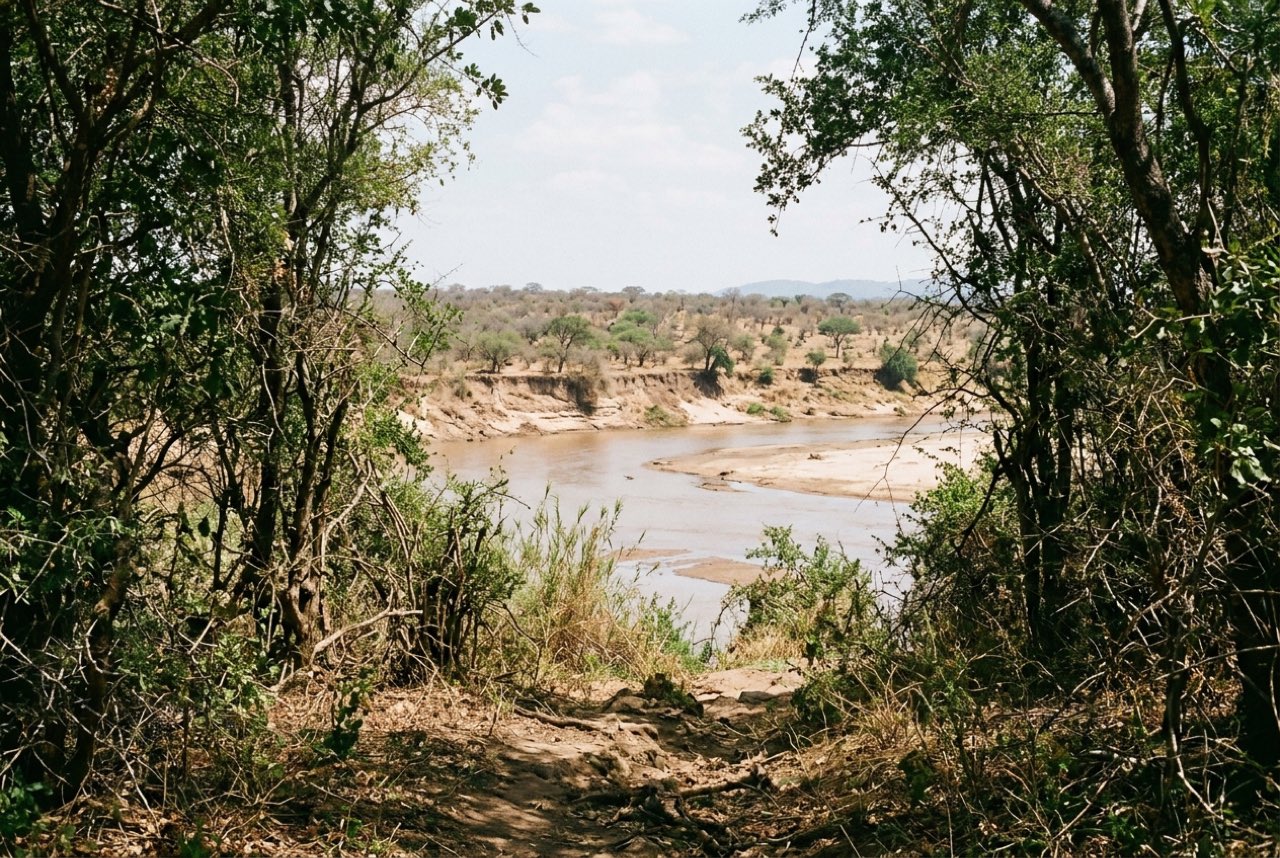
When people ask this desk for the Serengeti in migration season, what they usually describe is quite specific. A line of wildebeest coming down a bank, water breaking white, crocodiles moving in from the side, and the noise, which everyone who has heard it says is the part film does not carry. That is a real thing that happens, it happens in the Mara river sector between roughly July and September, and there is no argument to be made against wanting to see it.
What has changed is the number of people standing at the same bend at the same hour. The crossing points are few, they are known, and camps coordinate by radio, so a herd hesitating at the water draws vehicles from several miles out within about twenty minutes. Forty is not an unusual count at a good crossing. It is also a waiting game: parties sit at a bank for four or five hours on the chance the animals commit, and often they do not commit that day. Beds in the northern sector during those weeks run at two to three times what the same tent costs in February, because there are only so many of them and everyone wants the same eight weeks.
So this office offers the Rufiji instead. Nyerere National Park is roughly 12,000 square miles of southern Tanzania, and the part we book sits along a river that spreads into a chain of lakes. There is no migration here. What there is: elephants that come to drink in the late afternoon within thirty feet of a boat, one of the largest remaining African wild dog populations anywhere, lions that hunt along the sand rivers, and in nine nights you will likely see between two and six other vehicles in total. Not per day. In total.
What people ask for
the Serengeti in migration season
Two million animals moving as one body is a genuine natural event with no substitute anywhere on earth, and the people who plan a whole year around standing at the Mara river to see it are not wrong about what they will get.
A crossing in the July to September window is watched from a line of vehicles that regularly runs to forty, radios are shared between camps, and bed rates in the northern sector run two to three times their February figure.
What this desk will reserve instead
Nine nights on the Rufiji in Nyerere National Park
The same wildlife year, watched from a boat instead.
Nine nights, from $4,630 per person. Send a booking request
How far this sits from the request: only the reason for going survives
Nine nights in southern Tanzania: seven under canvas at two river camps, two in a brick lodge near the entry gate, moving by open vehicle and small boat, with one soft bag per person carried by the crew between camps.
Nyerere sits about 150 miles southwest of Dar es Salaam, reached by a 55 minute flight to a dirt strip or a six hour drive on tarmac then graded gravel. The ground is sand rivers, borassus palm and lake channels rather than open plain, so sightings are closer and shorter. Beds are canvas tents on raised decks with bucket showers, plus two nights in brick rooms with mains power. The season runs late June to mid March, and the trip is from $4,630 per person.
Nine nights of accommodation with all meals; two boat outings daily on the Rufiji channels; three guided walks with an armed ranger; all park entry fees for the nine days; the ground transfer to and from the airstrip at each end; road transfers between camps and the gate; drinking water, tea and coffee throughout; laundry at both river camps.
The light aircraft leg from Dar es Salaam to the airstrip and back, $410 to $560 return, which the operating company holds with the carrier under its own licence and bills you for directly; international flights to Dar es Salaam; alcohol, running $4 to $9 a bottle at camp; staff gratuities, usually $12 to $20 per guest per day; the $70 conservation surcharge on the fly camping night if you take it; anything medical, including tablets you should have brought; the single occupancy addition of $610 if you are not sharing; laundry at the lodge, which is charged by the item at $2 to $5; airport departure tax of $40, payable in cash at the strip.
Leave this trip alone if you cannot climb in and out of a boat with a 14 inch step down, unassisted, twice a day. The walks cover three to five miles on soft sand in temperatures that sit around 92F by ten in the morning, and there is no vehicle following you. Camps are two hours by road from the nearest clinic and five hours from a hospital. Tents have no air conditioning and no step free access. Children under eight are not accepted by either river camp, which is their rule, not ours.
The river, the sand and what the last few years have looked like
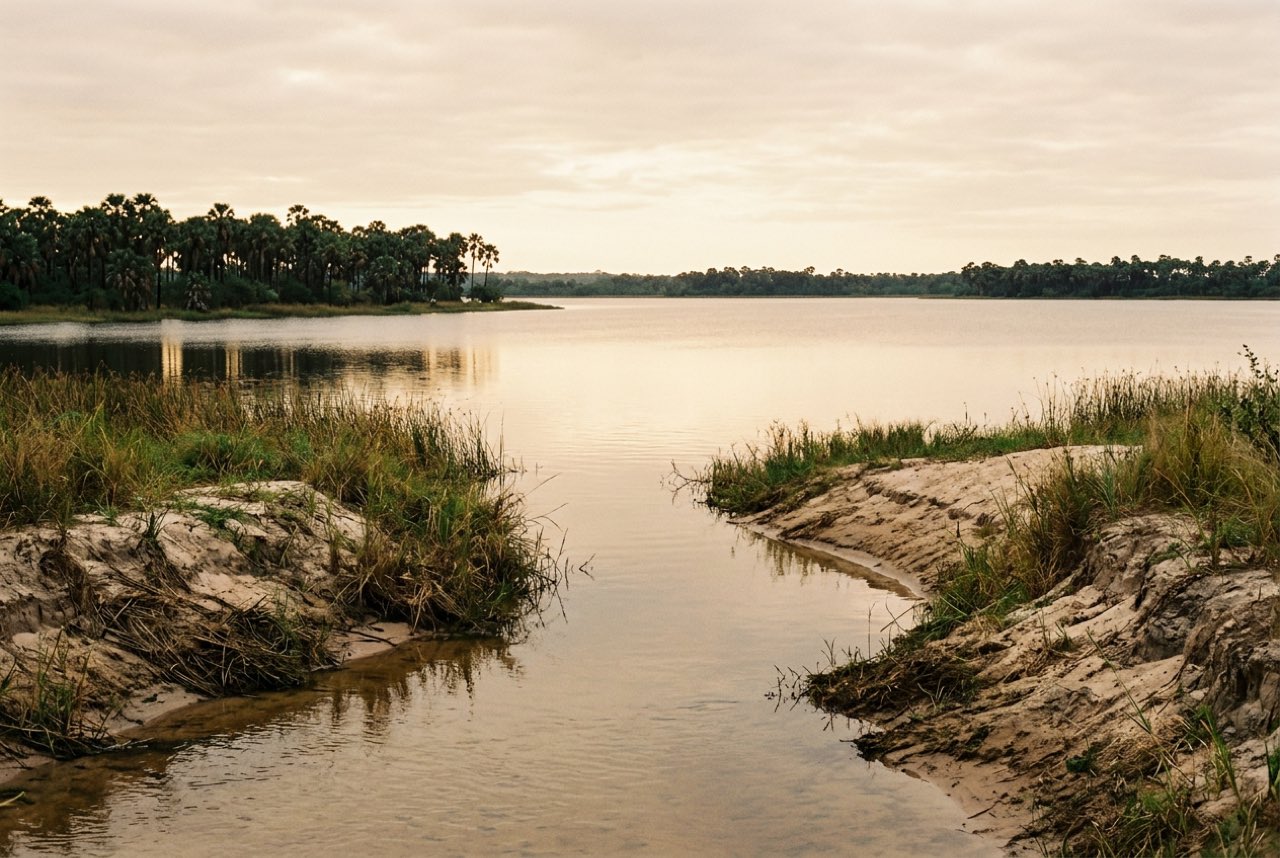
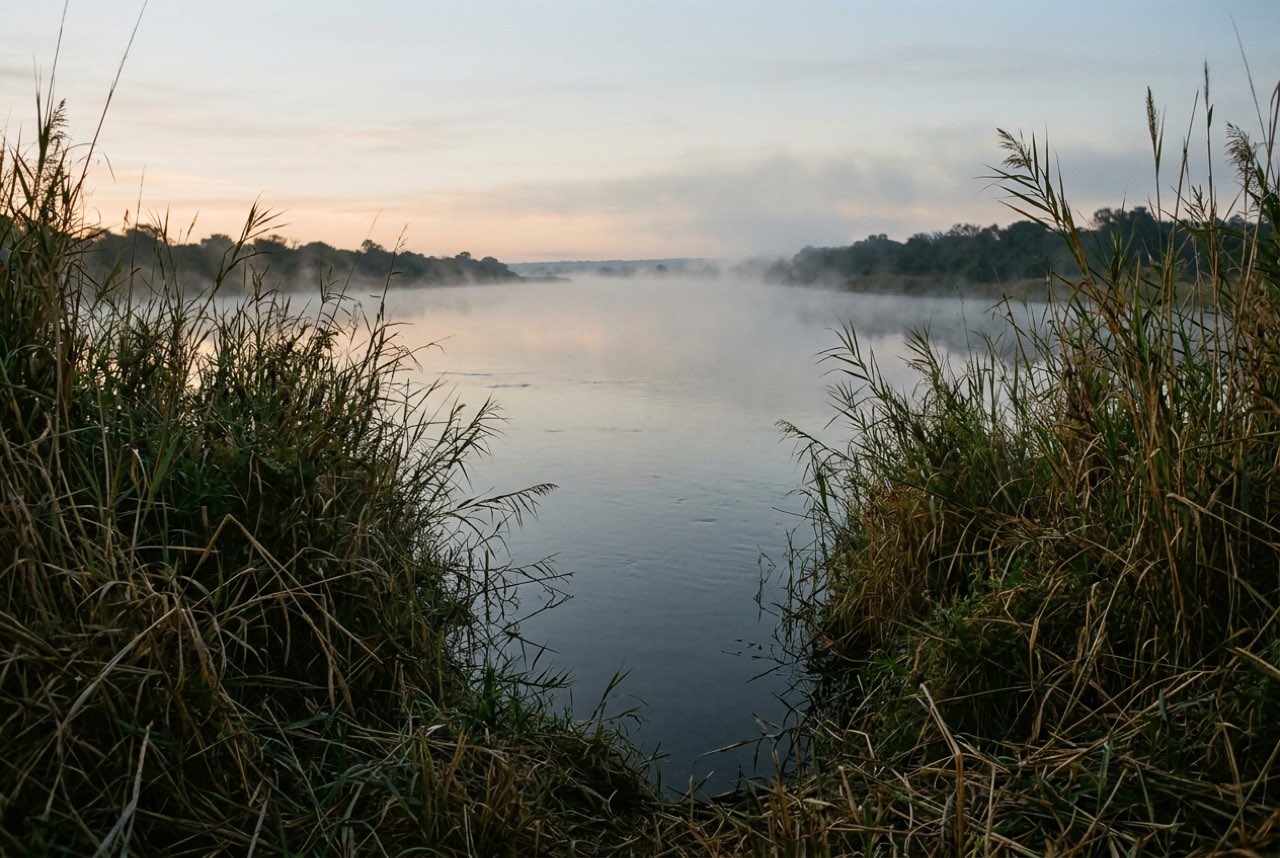
The Rufiji is not one channel. Below the camps it splits into a spread of lakes, backwaters and dead-end arms with names the guides use and the maps mostly do not. This matters for what a day looks like, because a boat can get to places a vehicle cannot, and because animals on a bank behave differently toward a boat than toward an engine on the same ground they walk on. Elephants in particular will keep feeding. Hippo are everywhere and are the reason nobody swims.
Away from the water the ground is sand and borassus palm, with stands of miombo woodland further back. It is thicker country than the plains people picture, which cuts both ways. Sightings are closer and more sudden, and you spend less time scanning a horizon. You also miss things. A leopard eight feet off the track in that scrub is invisible if it does not want to be seen, and there is no arguing with that.
On the season, taken as a record rather than a forecast: the last several years the camps have opened in the last week of June and closed somewhere between the tenth and the twentieth of March, with the closing date set by rain rather than a calendar. Late June through August has run dry and cool by local standards, with mornings near 63F. September and October have run hot and the game has concentrated hard on the water. November has been unreliable, sometimes fine and sometimes the start of the short rains. January and February have been green, hot and thin on visitors. That is what the years have done. It is not a promise about the year you go.
Who tends to get their money's worth here
This trip works for someone who would rather watch one thing for forty minutes than tick nine things in a morning. Boat mornings do not deliver a checklist. They deliver a bee-eater colony in a mud bank, a crocodile that has been in the same spot for three days, and then, without warning, forty elephants coming down to drink and nobody speaking for a quarter of an hour. If that sounds like a thin day, the northern parks genuinely will serve you better and this desk will say so on the phone.
It also suits people who have already done a first safari somewhere busier and came back slightly wrong-footed by the traffic. That is the most common reason anyone reserves this particular nine nights. Second-trip travelers, roughly two thirds of them, and photographers who want a low angle from the water rather than a raised one from a roof hatch.
The year as it has run, period by period
Camps reopen and the road in has usually dried enough for the six hour drive to be pleasant. Cool mornings near 63F, thick grass still standing, animals dispersed and harder to find.
Late July to August | The most settled stretch on record. Grass has dropped, the channels are still full, and boat access reaches the back lakes. This is also the only period the camps hold a waiting list. September | Heat builds through the month and water pulls back into the main channels. Game concentrates and sightings per outing have run highest here, but afternoons above 100F are normal and the walks move to first light only. October | Hot, dusty, and the best recorded month for wild dogs, which den in the dry and hunt at both ends of the day. Some back channels become too shallow for the boats. November to early December | The short rains have arrived anywhere from the first of November to the last week of it. Green comes fast, insects with it, and the light is the best of the year for anyone carrying a camera. January and February | Green season proper. Hot, humid, big skies, very few people. Two of the four camps in the sector close entirely, and the two that stay open run at their lowest occupancy of the year. Mid March to late June | Closed. The long rains put the airstrip and the internal tracks out of use, and nobody in the sector operates through them.
The part that catches people out
The flight. Nine nights in Nyerere means a light aircraft to a dirt strip, and the luggage rule that comes with it is not negotiable by anyone: one soft-sided bag, 33 pounds including hand baggage, no wheels and no frame. People arrive at Dar es Salaam with a hard case and have to repack in the terminal, sometimes leaving things behind at a hotel for a week. We send the rule in writing when the reservation is placed, and we send it again a month out, and it still surprises somebody most seasons. The alternative is the six hour road transfer, which removes the weight limit entirely and costs less, but you spend the better part of two days on it.
The other thing worth saying plainly: this is not a cheap trip, and it is not cheap because of camp rates. Park fees in Nyerere run high per person per day, the aircraft is expensive to operate to a strip that serves few beds, and the camps carry everything in by road before the season and out after it. About a third of what you pay never reaches a bed at all. That is the honest arithmetic, and anyone quoting you a much lower figure for the same nine nights is either using a camp outside the park boundary or fewer activities than are listed above.
Send this desk a booking request
This form is open 24/7 and takes booking requests at any hour. It asks for no card number and no payment, because nothing is ever paid to this office. Requests are read in the order they arrive and answered within one business day.
No card number is asked for on this page or held anywhere by this office, and sending this costs nothing and commits you to nothing. A request is not a reservation: nothing is held in your name until the operating company confirms it in writing and you have read its terms.