vineyards, oyster beds and a coast road with room on it
Reserve nine nights on the Peljesac peninsula, a working coastline two hours up the Adriatic
People who ask this desk for Dubrovnik are usually after a walled coastal town, warm water and a table outside at nine in the evening. You can reserve all three on Peljesac, forty miles north, where the season has not been sold out from under the residents.
Nine nights, from $4,840 per person.
The thing people are picturing when they ask for Dubrovnik is quite precise, and it is worth saying out loud rather than guessing at. It is the wall walk in the last hour before sunset, when the stone goes orange and the sea goes flat. It is the wide polished limestone of the main street, worn slick by four hundred years of feet. It is a table in a side lane, a plate of fish, and the sound of somebody else's conversation coming down off a balcony. Nobody asking for this is asking for anything foolish. They are asking for a town that was built dense and defensible and beautiful, and they want to be inside it in the warm part of the year.
What has changed is not the town. It is the arithmetic of how many people are standing on it at once. The walled area is about twenty two acres. A single large ship discharges more people than that space can absorb in a morning, and on the heaviest days several arrive together. The city itself has taken this seriously and now limits the number of ships permitted to berth per day, which has helped the worst peaks, but the underlying number is still enormous relative to the ground available. The consequence you actually feel is a queue on the wall stair, a single file shuffle on the main street between ten and four, and prices in the lanes set for people who will be there for six hours and never return.
The second consequence is quieter and harder to unsee once someone points at it. The residential population inside the walls has collapsed. Apartments went to short stay rental, the schools thinned, the everyday shops became gift shops. You can still find a bakery, but you are mostly walking through a place where the people you pass are, like you, visiting. That is a specific kind of disappointment, and it is not the fault of anyone who booked a flight. This desk simply does not reserve stays inside that circuit, because the thing being sold there is no longer the thing people describe when they ask for it.
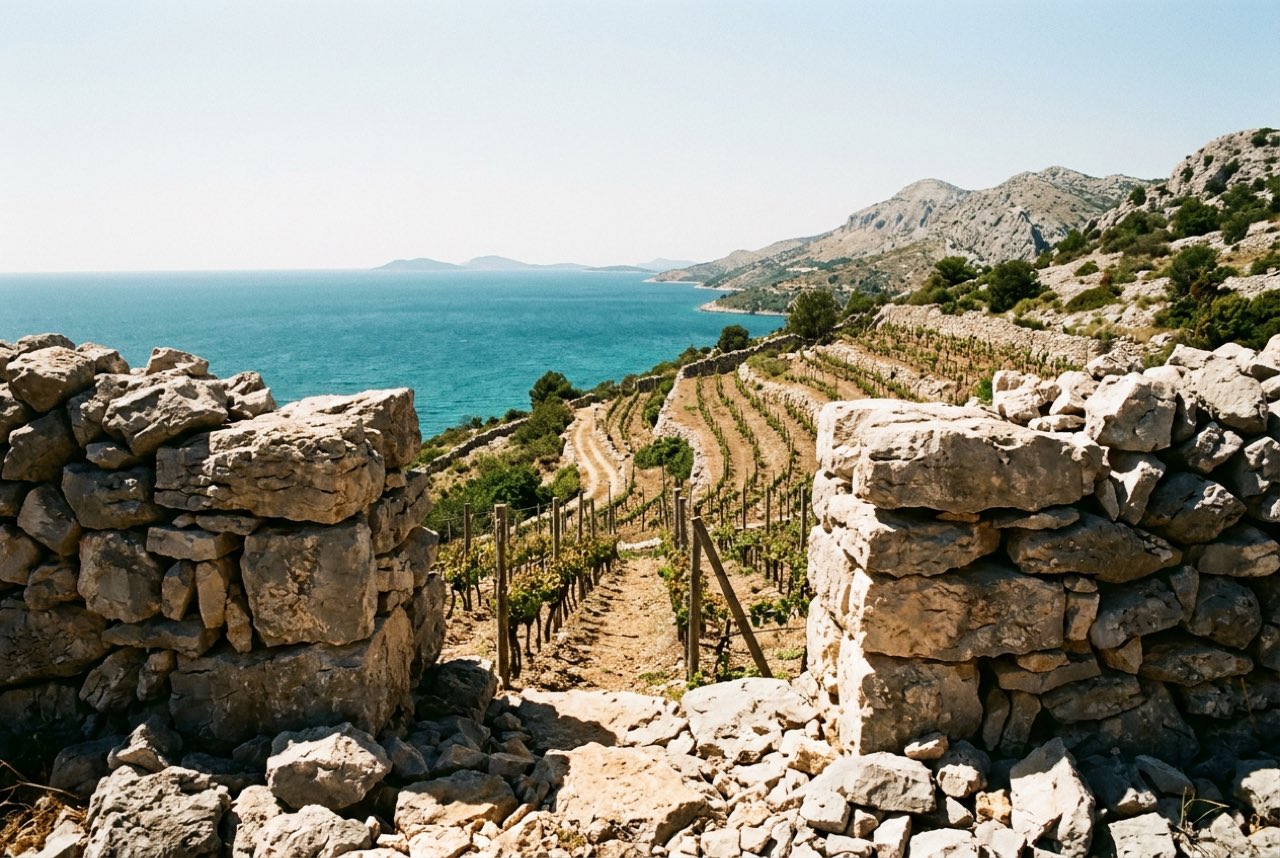
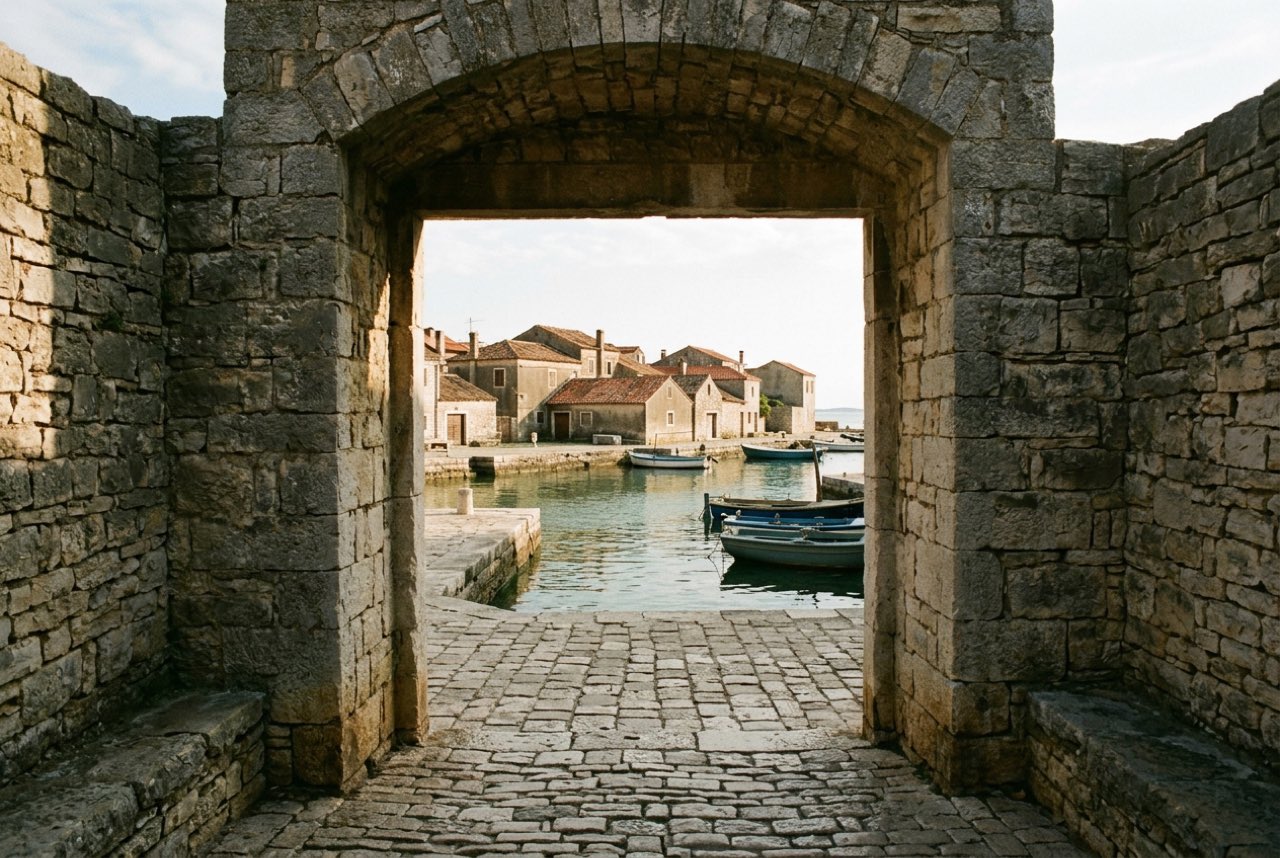
Peljesac is the same coast, the same water, the same evening light, ninety minutes north, and it is still inhabited by people who do something other than serve visitors. It grows wine on the steepest usable slopes in Croatia, farms shellfish in a bay that has been doing it since Roman engineering was new, and has a road down the middle of it with enough room to pull over and look. Ston has walls too: three and a half miles of them, the longest defensive circuit in Europe after the one at Constantinople, built to protect salt pans that are still worked by hand today. Almost nobody queues for them.
What people ask for
Dubrovnik
Dubrovnik is genuinely one of the finest surviving fortified port cities in Europe, the wall circuit is a mile and a quarter of continuous elevated view over terracotta and open sea, and wanting to walk it is a completely reasonable thing to want.
Dubrovnik's old town covers about twenty two acres inside the walls and receives cruise arrivals measured in the thousands on a single morning, while the resident population inside those walls has fallen from around five thousand in 1991 to a few hundred today.
What this desk will reserve instead
Nine nights on the Peljesac peninsula
Vineyards, oyster beds and a coast road with room on it.
Nine nights, from $4,840 per person. Send a booking request
How far this sits from the request: the same wish, a different address
Nine nights, two people sharing, in three family run guest houses along the peninsula: four nights near Ston, two at Trpanj on the north shore, three at Orebic. A small rental car for the whole stay, so bags stay in the trunk between moves.
Peljesac starts about forty miles up the coast road from Dubrovnik airport, roughly ninety minutes of driving. The spine of the peninsula is limestone ridge rising above two thousand feet, with vineyards cut into the south slope at angles that need hand picking. Beds are family run guest houses, six to fourteen rooms, breakfast on a terrace. The desk reserves this from late April to mid October. Nine nights, from $4,840 per person.
Nine nights in three guest houses with private bathrooms; breakfast every morning; a compact rental car with unlimited mileage and the standard collision waiver; all ferry and bridge tolls on the route; two vineyard visits with the grower, including tasting and a light meal; one morning on an oyster and mussel boat in the Mali Ston bay; the return foot passenger crossing to Korcula town; a printed route sheet with parking notes for each village; and airport pickup of the car at Dubrovnik with drop off at the same counter.
Flights to and from Dubrovnik; lunches and dinners other than the two vineyard meals, budget $28 to $45 per person for a full dinner with wine on the coast; fuel, about $95 to $130 for nine days of local driving; the young driver surcharge if anyone in the party is under twenty five, around $12 per day; parking in Korcula town, $4 an hour in the harbor lots in August with no shade; tolls on the Ston bridge approach if you route through the mainland instead of the ferry, $9 each way; the tourist tax of roughly $2.30 per person per night collected in cash by each guest house; and any interior museum admissions.
This trip involves driving. The coast road along the south side of Peljesac is two lanes with no shoulder, unguarded drops of sixty to a hundred feet in places, and blind curves where oncoming buses use part of your lane. Anyone unwilling to drive that should not reserve it. The vineyard visits require walking on loose stone at grades over twenty percent, and the oyster boat has a step down of about two feet from dock to deck with a hand line, not a rail.
The ridge, the water and what a day on the peninsula actually looks like
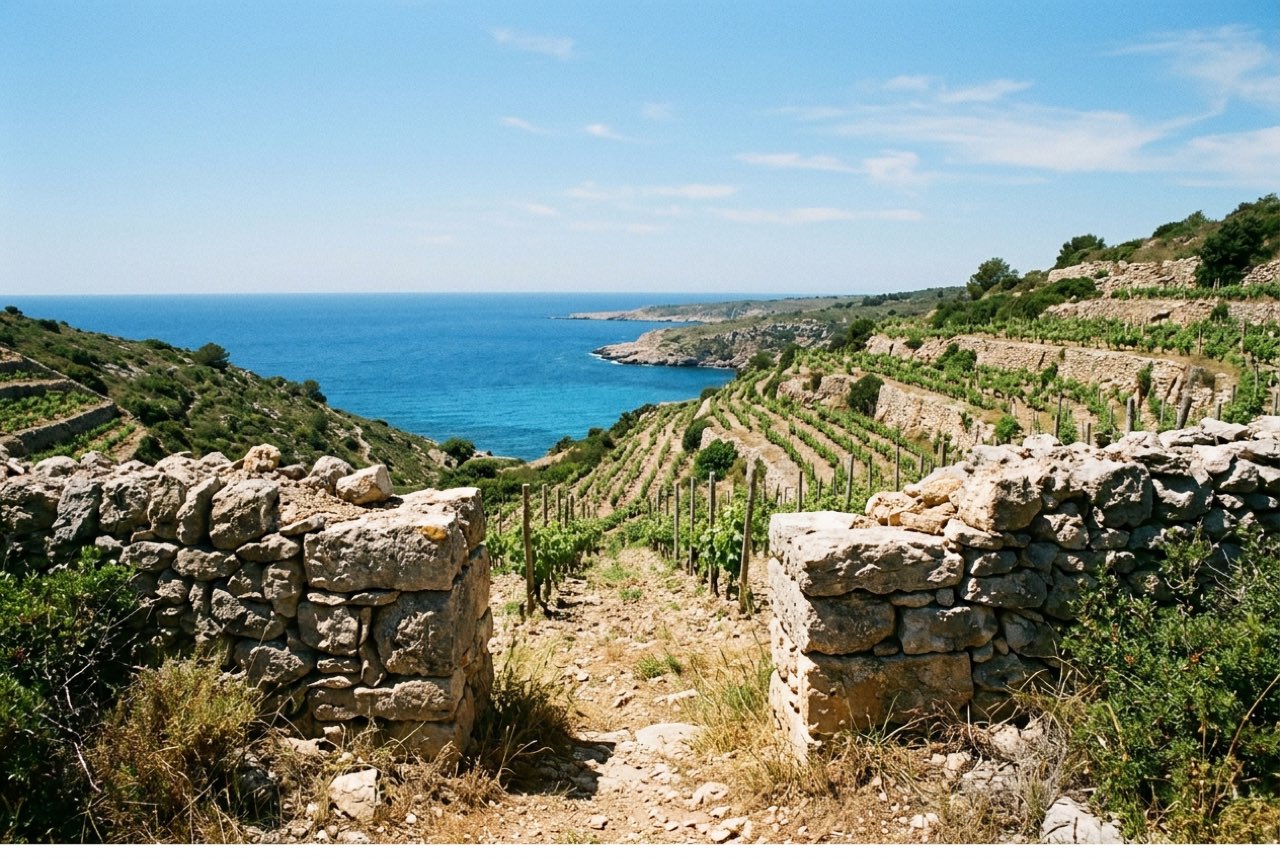
The peninsula is a limestone spine about forty three miles long and rarely more than five miles wide. The south flank drops into the sea in terraces held up by dry stone, and those terraces are where the plavac mali grows. Some of the plots at Dingac and Postup sit at grades where a tractor cannot go, so fruit still comes down by hand, or by a small cable line rigged to the slope. The north shore is gentler, greener, and faces the mainland across a channel about two miles wide. A day usually splits along that geography: mornings on the north side where the water is calm and shallow, afternoons out of the sun, evenings back on the south side where the light lasts longest.
The season record, and it is a record rather than anything anyone can promise, runs roughly like this. Sea temperatures come up past seventy degrees around the middle of June and hold above that until early October. July and August daytime highs sit in the high eighties and low nineties, with nights that stay warm enough to eat outside past ten. The bora wind comes down off the mainland mountains mostly in the colder half of the year, but it can arrive in a single day in May or October and drop the temperature fifteen degrees in an afternoon, which is why the desk reserves a rental car rather than relying on the open boat crossings for anything time critical.
Distances are short and the driving is slow, which is the correct combination. Ston to Orebic is about thirty five miles and takes a little over an hour if nothing is in front of you, longer if something agricultural is. The road is genuinely beautiful and genuinely narrow. Most days on this trip involve twenty to forty minutes behind the wheel and no more.
Who tends to get on well with nine nights here
This suits people who like a place better once they have figured out where the good bread is, and who would rather stay put in three spots than move seven times. It rewards anyone with an interest in how wine is actually made on difficult ground, because the growers here are small, are usually the ones pouring, and will talk about hail and yield and the cost of hand picking if you ask a real question. It also suits swimmers: the water off the north shore is clean and gets deep gradually, and there are stretches of pebble beach where you will be one of maybe a dozen people on a weekday in June.
It is not a good fit for anyone who wants a full evening scene, nightlife, or a choice of twenty restaurants within walking distance. Trpanj has a handful of places and they close early. If a party wants to be entertained rather than left alone, this is the wrong coastline and the desk would rather say so before a deposit exists anywhere.
The year on the peninsula, as it has run
Vines are pushing shoots and the terraces look bare. Sea around sixty three degrees, too cold for most swimmers. Guest houses are half empty and the growers have time to sit down with you.
The best balance most years. Water crosses seventy degrees in mid June, days in the low eighties, and the coast road is quiet enough to stop where you want without holding anyone up.
Hot and busy by local standards, which still means finding a parking space rather than queueing for one. Highs near ninety, the ferry to Korcula runs its fullest schedule, and dinner needs a phone call ahead.
The peak, and the only month the desk hesitates over. Croatian and Italian families take their own holidays now, the beaches near Orebic fill, and accommodation rates run about thirty percent above June.
Harvest. Trucks and crates on every road on the south slope, growers working sixteen hour days, sea still near seventy five degrees. The most interesting month to be here and the least restful.
Quiet again, water holding around seventy degrees for the first half, some restaurants shutting for the winter without notice. Light is low and long and the ridge looks entirely different.
The desk does not reserve stays here. Ferries drop to a skeleton timetable, most guest houses close, and the bora makes the coast road genuinely unpleasant for days at a stretch.
The part that annoys people, said in advance
The ferry between Ploce and Trpanj, and the one from Orebic across to Korcula, are working transport rather than an attraction, and they behave like it. Sailings get cancelled in a strong bora with a few hours of notice, sometimes less. There is no alternative crossing when that happens: you drive around, which adds two and a half hours from the Trpanj side. The desk builds slack into the itinerary for exactly this, but it means a fixed flight home on the morning after a windy night is a bad plan, and this trip is written with a spare buffer night at Orebic rather than a tight connection.
The second thing is the wine, and it is a money question. Plavac mali from the two named south slope sites is not inexpensive, because the yield per acre on a forty degree terrace is a fraction of what flat ground gives. A good bottle at the cellar door runs $28 to $55, and people sometimes arrive expecting farm gate prices and find something closer to what a comparable bottle costs at home. That is not a markup aimed at anyone. It is what it costs to pick fruit by hand off a cliff. The two vineyard visits and the meals with them are covered in the figure above, and anything you decide to carry home is not.
Put a request in front of the desk
This form is open 24/7 and takes booking requests at any hour. It asks for no card number and no payment, because nothing is ever paid to this office. Requests are read in the order they arrive and answered within one business day.
No card number is asked for on this page or held anywhere by this office, and sending this costs nothing and commits you to nothing. A request is not a reservation: nothing is held in your name until the operating company confirms it in writing and you have read its terms.